


February 22, 2023

Wall removal safety assessment case study
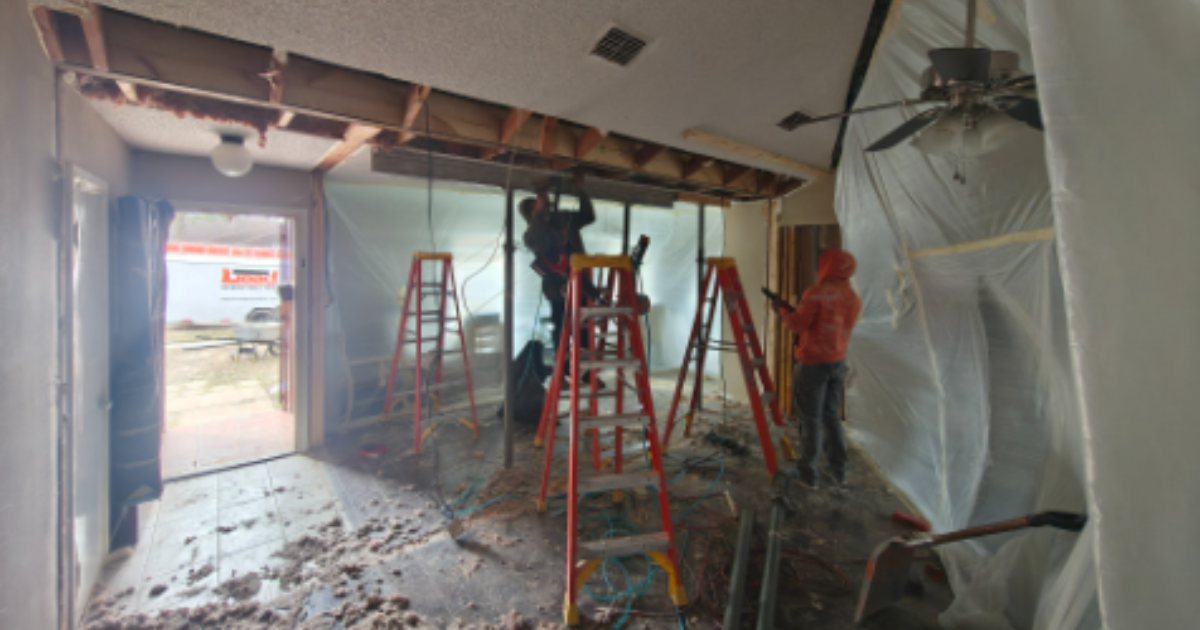
Stephen W. had an 18-foot load bearing wall standing between him and the open-concept space he wanted in his Plano, TX home. It was a real structural job, not a weekend project, as the wall needed to come down and be replaced with a steel beam. He hired Load Bearing Wall Pros, and the crew had it done in less than half a day.
That outcome didn’t happen by chance. It came from a thorough wall removal safety assessment, a specialized team, and a process refined across more than 12,000 completed projects. This case study breaks down exactly how it worked.
Read on to see what a professional wall removal looks like in practice and why it makes all the difference.
What Made This a Complex Structural Job
Stephen’s load bearing wall wasn’t a small interior partition someone could chip away at over a weekend. It was a full structural wall carrying the weight of the home above it – the kind of wall that, when removed incorrectly, could cause ceiling sag, uneven load distribution, and long-term foundation stress.
Home stability assessments for walls of this size require a specific sequence of steps before a single stud is touched. The crew needs to understand how the load is being transferred through the structure, where the weight is going, and what temporary wall support system is required to hold everything safely in place while the permanent solution (in this case, a steel beam) is installed.
This is exactly the kind of job where cutting corners creates problems that don’t show up right away. That’s why structural assessment techniques matter before any demo begins.
For Stephen’s project, we came in with a clear plan, a specialized crew, and the tools and materials needed to do the job right. No improvisation. No guesswork.
How LBWP Conducted the Wall Removal Safety Assessment
Step 1: Dust Control Before Anything Else
Before the first piece of sheetrock came down, the crew established a contained work environment. Large moving blankets were laid over the floors in the construction area, and painter’s plastic was used to seal off the rest of the home. In Stephen’s case, this meant the rest of the house stayed completely clear – no dust, no debris drifting into adjacent rooms, no mess creeping under doorways.
Stephen noted this specifically in his review: “They completely blocked off the work area so that no dust or debris entered the rest of the house.”
That’s not an accident. It’s a deliberate part of Load Bearing Wall Pro’s process. Dust containment is one of the first stability checks for remodeling that shows how seriously the team takes protecting the home as a whole.
Step 2: Temporary Shoring and Structural Support
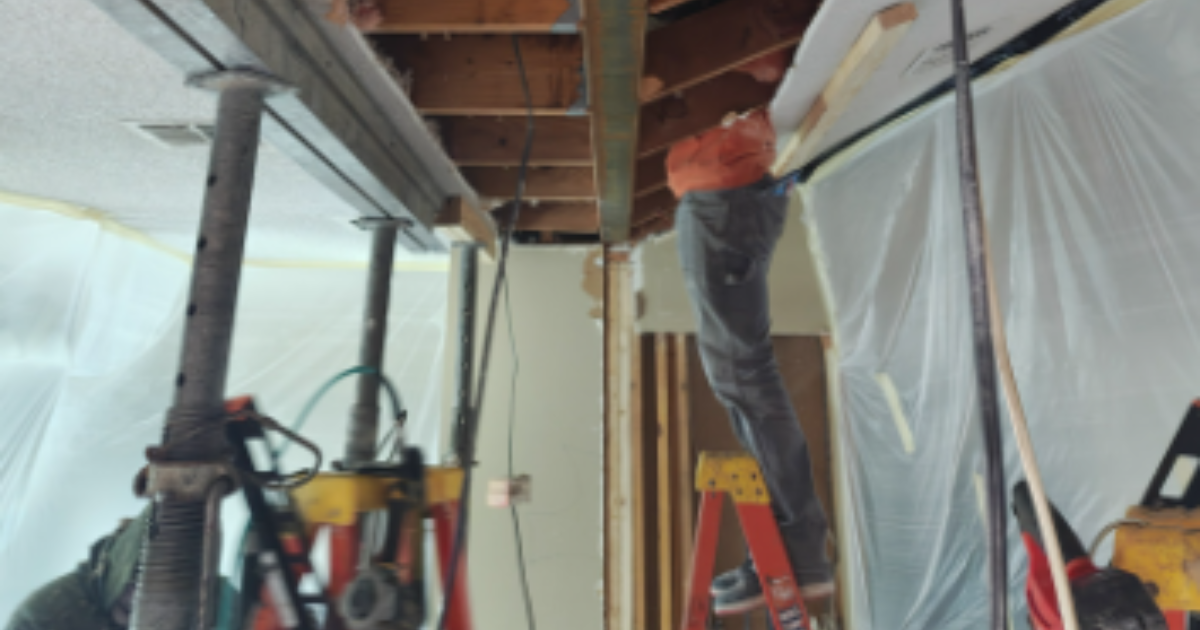
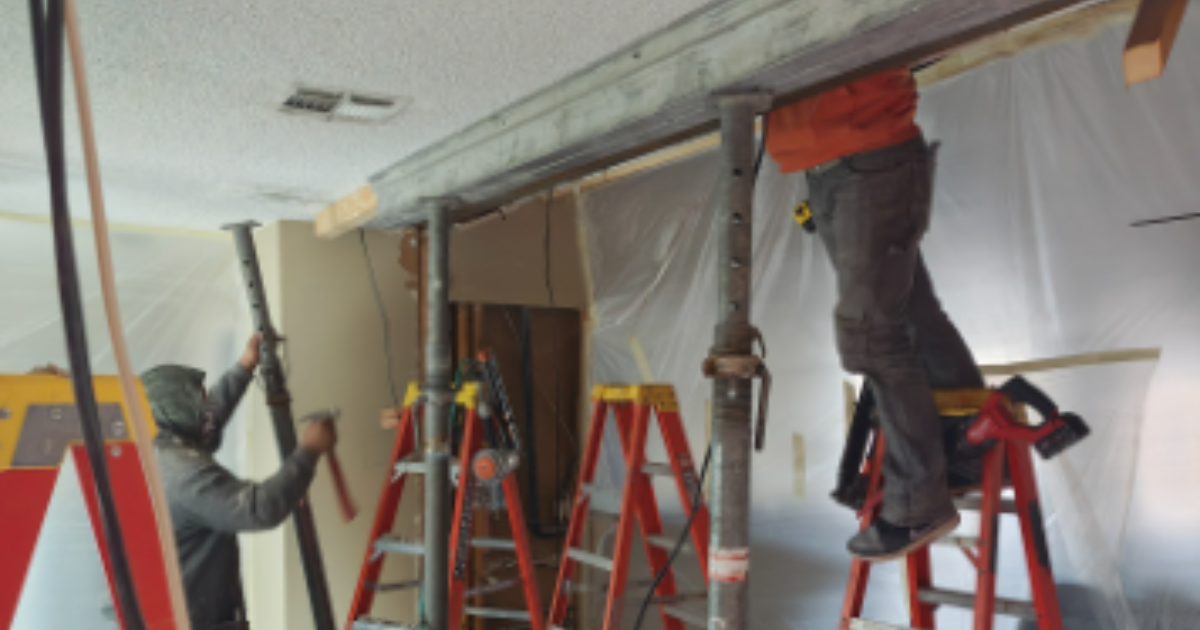
With the area secured, the next phase was installing temporary shoring. Shoring posts and I-beams are used to temporarily carry the load that the existing wall is holding. This isn’t optional. Without this structure, removing the wall introduces real risk to the ceiling joists above and the structure as a whole.
Our crews do this 40 to 60 times every single week, across multiple job sites simultaneously. They’ve completed over 12,000 wall removals since 2015, so even though the shoring process is second nature to them, that familiarity never turns into carelessness.
For Stephen’s 18-foot wall, the temporary support system had to span the full opening that would eventually hold the steel beam. Getting this right is what makes the rest of the job clean.
Step 3: Demo, Exposure, and Ceiling Joist Prep
Once the shoring was in place, the demo phase began. Sheetrock was removed, studs were taken out, and any wiring in the wall was addressed.
This is where structural evaluations during renovations happen in real time. An experienced crew reads what they find inside the wall and above the ceiling line and adjusts accordingly. Not every wall hides the same surprises, and 12,000 jobs teach you how to handle the ones that don’t go exactly by the book.
Step 4: Beam Installation and Joist Integration
The steel beam (the permanent solution for Stephen’s 18-foot opening) was lifted into place and secured. After that, stud-packs were installed inside the walls on both sides to reinforce the beam’s bearing points. And once they were confirmed and the joists were tied into the new beam, the temporary shoring came out.
That’s the moment the home stability assessment is essentially complete and the structure is correctly carrying its load through the new system.
What Stephen Experienced as a Homeowner
Structural work sounds intimidating on paper. But in practice, when done by the right team, homeowners often describe feeling surprised at how smooth it was. Stephen’s experience reflects that almost exactly:
“Load Bearing Wall Pros did a great job removing an 18-foot load bearing wall and replacing it with a steel beam. They showed up on time, worked fast, and were very efficient the whole way through. You could tell they knew what they were doing. The entire job was finished in less than half a day, which was awesome considering the amount of work involved. Very professional and easy to work with – I’d definitely recommend them to anyone needing this kind of work done.” – Stephen W., Plano, TX.
We complete approximately 90% of our jobs in a single day. An 18-foot steel beam installation wrapping up in the morning is a direct result of having a specialized crew that does this work every week of the year.
Stephen mentioned that you could “tell they knew what they were doing.” That’s the feeling homeowners get when a team moves with confidence, communicates clearly, and doesn’t stop to figure things out mid-job.
The Safety Infrastructure Behind Every LBWP Project
What made Stephen’s project go smoothly wasn’t luck. It was the result of systems LBWP has built specifically around structural wall removal.
Specialized Crews
Every LBWP crew member is trained specifically for structural remediation. Our safety inspections for remodeling are built on the depth of experience that’s difficult to replicate elsewhere.
Lifetime Transferable Structural Warranty
Every LBWP project comes backed by a lifetime, written, transferable structural warranty specifically written to include column and load bearing wall removal. The transferable nature of the warranty means that if Stephen ever sells his home, the new owners inherit that coverage. It’s a real, documented assurance of the work’s structural integrity, not a handshake promise.
$2 Million Insurance Coverage
LBWP carries workers’ compensation for their employees and a $2,000,000 general liability insurance policy specifically written to include load bearing wall and column removal.
Why Homeowners in Plano Choose LBWP
Plano is a city with a mix of established neighborhoods and homes that were built in the 1970s, 80s, and 90s – decades when floor plans were often more compartmentalized than today’s open-concept preferences. The desire to remove walls and open up living spaces is common here, and so is the uncertainty about who to trust with the structural work.
Our track record in the Dallas-Fort Worth area reflects what happens when homeowners choose a specialist over a generalist. The combination of specialized crews, a proven process, real insurance coverage, and a lifetime warranty gives homeowners something that’s actually rare in the contracting world: confidence that the job is done right, documented, and backed up.
Stephen’s project is one of thousands, but it illustrates the consistent experience we deliver – on time, efficient, professionally contained, and finished faster than most homeowners expect.
FAQ About Wall Removal Safety Assessment
What is a wall removal safety assessment and why does it matter?
A wall removal safety assessment is a structured evaluation of how a load bearing wall contributes to your home’s structural system before any demolition begins. It identifies how the load will be temporarily supported, what permanent replacement is needed, and how the surrounding structure will be affected. Without it, wall removal carries a real risk of ceiling movement, uneven load distribution, and long-term structural damage.
How do I know if my wall is load bearing before calling a contractor?
Load bearing walls typically run perpendicular to the floor joists above, sit above a beam or foundation wall below, and are often located near the center of the home. That said, the only reliable way to confirm a wall’s structural role is to have a qualified professional assess it in person. We conduct structural evaluations during renovations and can determine load bearing status before any work begins.
How long does a wall removal safety assessment and removal take?
For most of our projects (roughly 90% of them), the full job, including the safety assessment, removal, and beam installation, is completed in a single day. For instance, Stephen W.’s 18-foot wall in Plano was completed in less than half a day.
What kind of structural support is used during wall removal?
LBWP uses shoring posts and I-beams to temporarily carry the structural load while the wall is being removed. This temporary support system stays in place until the permanent beam is installed, the joists are tied in, and the stud-packs are confirmed. Only then is the temporary shoring removed.
Will wall removal affect my home’s foundation?
When done correctly, wall removal does not negatively affect your foundation. LBWP’s process includes careful load path management, ensuring the structural weight that was carried by the wall is properly redirected through the new beam and into the correct bearing points leading to the foundation.
Does LBWP offer any warranty on structural wall removal work?
Yes. LBWP provides a lifetime, written, transferable structural warranty specifically covering load bearing wall and column removal. The warranty transfers to new owners if the home is sold, making it a lasting assurance of the work’s integrity.
What makes LBWP different from a general contractor for this type of work?
Our crews complete 40 to 60 wall removals every week and have finished more than 12,000 since 2015. We also carry a $2 million general liability insurance policy and workers’ compensation, both specifically written to include load bearing wall and column removal.
Closing Thoughts and Next Steps
Stephen W.’s project in Plano is one data point in a much larger pattern. The specifics vary, but the experience Load Bearing Wall Pros clients describe tends to follow the same shape: the crew shows up on time, the work area is protected, the job moves faster than expected, and the house looks and feels different in a way that’s immediately obvious.
That consistency isn’t a coincidence. It’s the product of a company that has built its entire operation around doing one thing exceptionally well.
If you’re in the early stages of thinking about removing a load bearing wall, or if you’ve been putting it off because the project feels too uncertain, too risky, or too disruptive, this is your sign to schedule a wall removal safety assessment. It will turn your hesitation into a clear, manageable project with a defined outcome and a team that’s done it thousands of times before.
Contact us today to discuss your project and find out what a professional structural assessment looks like for your specific home.
About the Author
Jason Hulcy, the founder of Load Bearing Wall Pros, is a seasoned expert in wall removal and home renovations. With a passion for innovation and sustainability, he has helped countless homeowners achieve their dream spaces safely and efficiently. Learn more about his expertise here.
Recent posts
-
-
 October 26, 2022