


February 22, 2023

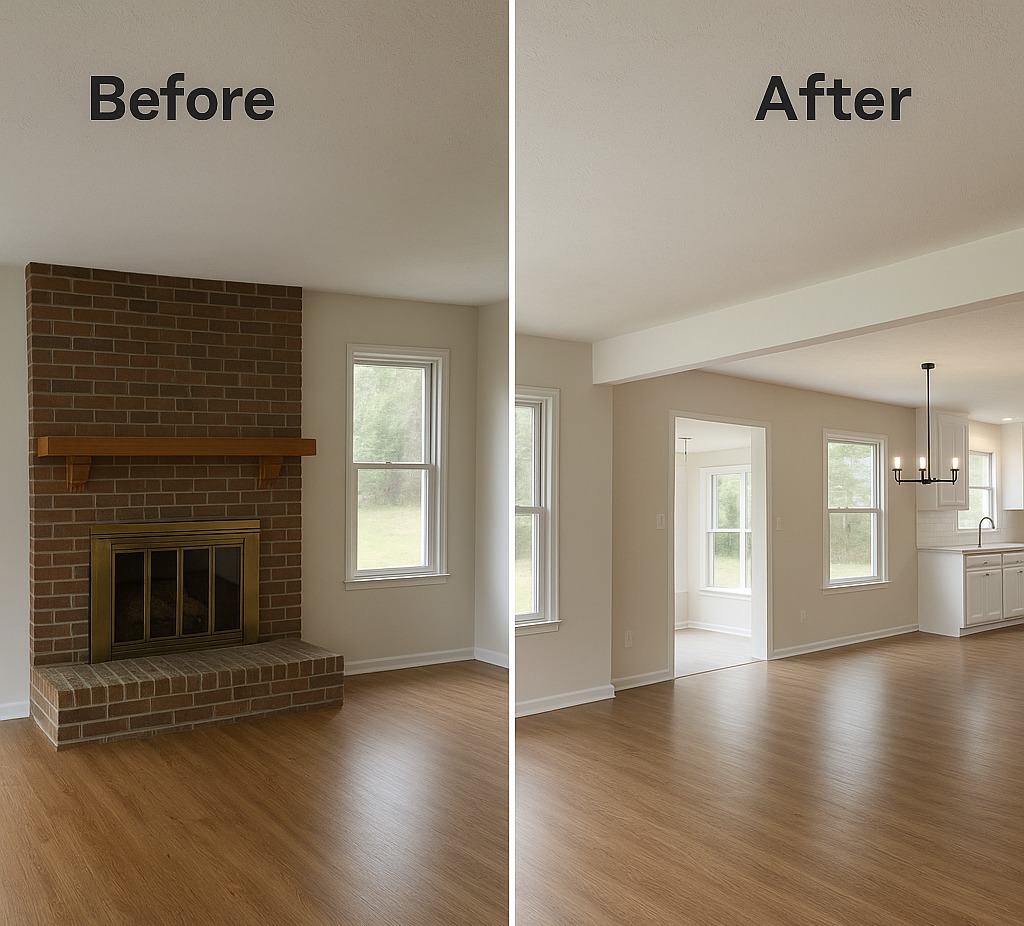
Can You Replace a Fireplace with a Structural Beam?
Fireplaces are often the heart of a home, a symbol of comfort and tradition. But in today’s open-concept designs, they can also be an obstacle. Homeowners looking to create more light, space, or modern flow often ask a structural question that can’t be answered by design intuition alone: Can you replace a fireplace with a structural beam?
The short answer is yes. But only with the right structural support, engineering, and expertise. Let’s walk through what that really means, from how fireplaces affect load paths to what’s involved in replacing them with beams safely and legally.
Why Homeowners Consider Removing a Fireplace
Every renovation starts with a vision. Maybe you’re opening up your living room to the kitchen, or maybe the old brick hearth is crumbling and unused. Fireplaces take up valuable wall space and often divide rooms that could feel twice as large if opened up.
A few common reasons clients at Load Bearing Wall Pros choose to replace their fireplaces include:
- Open-concept remodeling: Removing a central fireplace allows for seamless sightlines between kitchen, dining, and living spaces.
- Adding light: Many traditional chimney structures block natural light, especially when paired with narrow windows.
- Updating aesthetics: Brick or stone fireplaces can date a home; removing them allows modern finishes or panoramic windows.
- Reclaiming square footage: A full fireplace and chimney chase can take up as much as 20–30 square feet of floor space.
- Structural damage or redundancy: Some fireplaces are no longer functional, unsafe, or unnecessary in modern HVAC-equipped homes.
But what sits behind that fireplace is often more complex than homeowners realize and that’s where the structural beam comes in.
How a Fireplace Affects the Load Path of Your Home
Fireplaces aren’t just decorative – they’re heavy structural components. Masonry units weigh thousands of pounds and often interact with load paths in subtle ways.
Here’s what typically happens behind the drywall:
- The fireplace foundation transfers weight to the footing.
- The chimney continues upward through multiple stories, sometimes supporting framing or roof elements.
- The adjacent wall might rely on the chimney mass for lateral bracing.
When a homeowner removes that entire structure, the load path changes meaning the weight that used to travel through the fireplace must be redirected. Without proper compensation, floors can sag, cracks can appear, or the roof structure can distort over time.
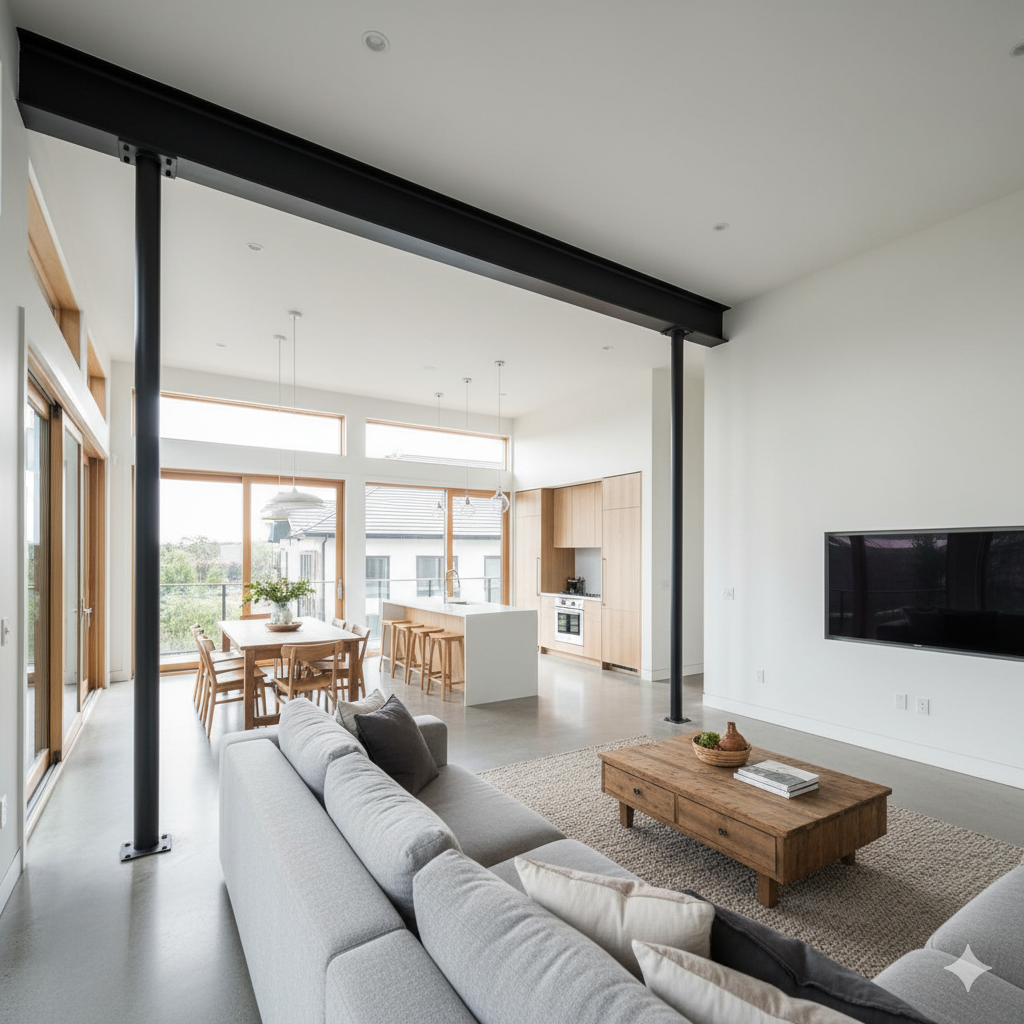
That’s why structural beam replacement is the safest and most effective solution. A correctly sized beam (steel, LVL, or engineered wood) can redistribute the load evenly across new supports, maintaining the home’s integrity while opening up the space.
Can You Replace a Fireplace with a Structural Beam? (The Engineering Answer)
Yes, but it must be designed, calculated, and installed by qualified professionals.
When Load Bearing Wall Pros evaluates a fireplace removal project, our process involves several key steps:
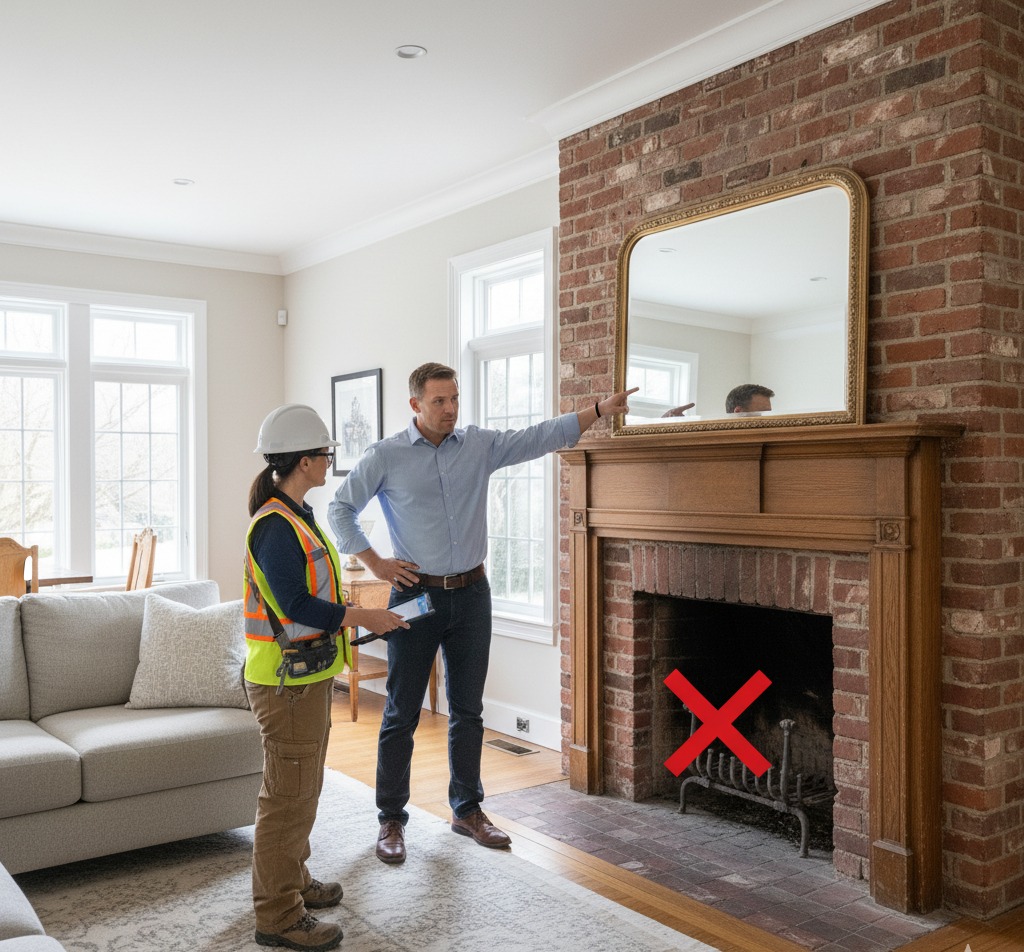
- Structural Assessment: We determine whether the fireplace or chimney contributes to the load bearing system.
- Load Calculations: Our structural engineers calculate the exact load previously carried by the fireplace structure.
- Beam Design: Based on span length and material, we size a new beam, often steel I-beam or laminated veneer lumber (LVL) to safely support the redistributed weight.
- Temporary Support: Before any removal, we install shoring walls or jacks to hold the load while the new beam is placed.
- Beam Installation: Once the old fireplace is demolished, the new structural beam is set in place, properly bearing on new posts or columns tied to the foundation.
- Inspection & Finishing: After structural approval, the space can be finished with drywall, cabinetry, or custom design elements.
The result is an open, modern layout with structural integrity fully maintained.
Choosing the Right Beam: LVL vs. Steel
Every project’s beam material depends on the span, load, and aesthetic goals.
- LVL Beams (Laminated Veneer Lumber):
Ideal for moderate spans. LVL beams are engineered wood products known for strength and uniformity. They integrate easily with wood framing and can be concealed within ceilings. - Steel Beams (I-Beams or H-Beams):
Used for longer spans or heavier loads, steel beams offer superior strength with less depth. They are often the go-to choice for open-concept conversions where fireplaces once stood.
At Load Bearing Wall Pros, we often use steel beams in wall removal projects and open concept remodels especially when homeowners want a completely seamless ceiling line.
If you’re unsure which option fits your project, a structural inspection will clarify it quickly. In some cases, hybrid designs (LVL flitched with steel plates) provide both strength and convenience.
What Happens to the Chimney and Foundation
Replacing a fireplace isn’t just about removing bricks, it’s also about addressing what happens below and above the visible structure.
The Chimney
If your fireplace includes a full masonry chimney, it typically extends through the roof and must be removed or capped properly. Improper demolition can leave unsupported sections that cause roof leaks or instability. A licensed contractor will remove it in stages, often requiring scaffolding and roof repair afterward.
The Foundation
Many fireplace foundations are deeper and more reinforced than surrounding slabs. After removal, the cavity must be filled, compacted, and leveled to maintain consistent flooring and prevent settling.
This is often coordinated alongside structural beam installation to ensure everything below grade is structurally sound before finishing work begins.
Permits, Inspections, and Safety Codes
Fireplace removal with structural modification isn’t a DIY project. City building departments require permits for any work that affects load bearing components, and for good reason. Improper beam sizing or installation can compromise your home’s safety.
During your remodel, expect to work with:
- Structural engineers for calculations and stamped drawings
- General contractors for demolition and coordination
- City inspectors for final approval before drywall or finishing
You can review common requirements on official resources like The International Residential Code (IRC) , a trusted national standard.
Cost Considerations and Timeframe
Replacing a fireplace with a beam typically costs $5,000-$15,000, depending on structural complexity, materials, and finish work.
Here’s how that breaks down:
- Structural engineering: $1,000-$2,000
- Demolition and debris removal: $1,000-$3,000
- Beam, posts, and installation: $3,000-$8,000
- Finishing, flooring, drywall, and paint: $2,000-$4,000
Projects that involve multiple beams or chimney removal will trend toward the higher end. Still, when compared to the long-term value of open-concept living and the resale appeal it adds, the investment is often well worth it. Most projects take 1-2 weeks from demolition to completion, depending on inspection scheduling and finish scope.
Choosing the Right Contractor for the Job
Removing a fireplace and installing a beam is one of the most technical remodeling projects you can undertake. It requires synchronization between demolition crews, engineers, framers, and finish carpenters.
Here’s what to look for when selecting your contractor:
- Specialized experience in structural work: General remodelers may not have the expertise for load redistribution.
- Licensed and insured: Always verify credentials before work begins.
- End-to-end service: The best contractors handle engineering, permitting, and execution under one roof.
- Proven results: Ask to see before-and-after examples of previous fireplace-to-beam conversions.
Load Bearing Wall Pros has completed thousands of successful structural remodels across Texas, including fireplace removals, kitchen remodel integrations, and complete open-concept transformations.

What to Expect When Working with Load Bearing Wall Pros
We’ve developed a proven step-by-step process that keeps your project safe, efficient, and stress-free:
- Free consultation: We evaluate your fireplace and discuss design goals.
- On-site structural assessment: Engineers measure loads, materials, and framing.
- Beam design & permitting: Our team handles calculations and approvals.
- Demolition & temporary support: Old structures are removed under supervision.
- Beam installation & inspection: Permanent supports are installed and approved.
- Finishing: We coordinate drywall, flooring, and paint for a clean result.
It’s a comprehensive process backed by decades of expertise and it’s why homeowners across Dallas–Fort Worth trust us for structural remodels that change their homes for good.
Ready to Open Up Your Space?
So, can you replace a fireplace with a structural beam? Absolutely if you do it right.
It’s more than a design choice, it’s a structural transformation that requires engineering precision. When performed by experts, it gives you all the openness and light you dream of, with none of the risks.
If you’re ready to start planning your project, contact us for a free consultation today. We’ll help you turn that heavy fireplace into a bright, open living space that feels brand new.
Fireplace-to-Beam Conversion: Frequently Asked Questions
Can you really replace a fireplace with a structural beam?
Yes, as long as the structure is properly engineered. Fireplaces often carry significant weight through the chimney or adjacent framing, so a correctly sized beam (steel or LVL) must be designed to redistribute those loads. A professional team ensures your home remains structurally sound during and after the conversion.
Do I need a permit to remove a fireplace?
Yes. Any modification that affects load bearing walls or foundations requires a building permit.
How much does it cost to replace a fireplace with a beam?
Most projects range between $5,000 and $15,000, depending on structural complexity, beam material, and finish work. The best way to know your cost is through an on-site assessment where our engineers can calculate the load, beam span, and installation requirements.
What happens to the chimney after the fireplace is removed?
If the fireplace includes a masonry chimney, it’s either capped and sealed above the roofline or removed entirely. The open cavity must be structurally reinforced and finished properly to prevent leaks or settling. Our structural engineering experts handle every step safely.
How long does the project take?
Most structural modifications can be completed in as little as one to two days, depending on the size and complexity of the project. A more precise timeframe can be provided during your on-site estimate after we’ve evaluated your specific structure and scope of work.
Can the beam be hidden in the ceiling?
Yes, in most cases. Depending on your framing style and ceiling height, we can recess the beam into the ceiling cavity for a seamless open-concept finish, a popular option in our open concept remodels.
What other structural modifications can I combine with this project?
Many homeowners pair fireplace removal with wall-to-door conversions, kitchen remodels, or other framing adjustments to create a cohesive open space. For more possibilities, explore our other structural services.
About the Author
Jason Hulcy, the founder of Load Bearing Wall Pros, is a seasoned expert in wall removal and home renovations. With a passion for innovation and sustainability, he has helped countless homeowners achieve their dream spaces safely and efficiently. Learn more about his expertise here.
Recent posts
-

-
 October 26, 2022