
How Load-Bearing Walls Affect Open-Concept Designs
4109 | Slug: how-load-bearing-walls-affect-open-concept-designs---
For forty years, a concrete wall divided Berlin.
On one side: freedom, opportunity, light. On the other: isolation, limitation, the feeling of being trapped in a space that could be SO much more if only that wall wasn't there.
Sound familiar?
Because right now, somewhere in Texas, you're standing in your kitchen staring at a wall. And on the other side is your living room. And between them is eight inches of drywall, studs, and maybe a few decades of "this is just how the house was built."
But you can SEE it. The open-concept dream. The kitchen island where you'd cook while your kids do homework at the bar. The living room that flows right into the dining area. The light -- GOD, the light -- that would pour through the entire space if only that WALL wasn't in the way.
Well, here's the good news: unlike the Berlin Wall, yours can come down in ONE DAY. And nobody's going to write a protest song about it.
But there's a catch. Because your wall -- like Berlin's -- might be holding up more than you think.
The Iron Curtain of Your Floor Plan
Not every wall is just a divider. Some walls are doing CRITICAL structural work behind the scenes -- holding up your roof, supporting your second floor, keeping your ceiling from participating in gravity's favorite hobby.
These are your load-bearing walls. And in the quest for open-concept living, they're the iron curtain that stands between your current floor plan and the one you actually want.
The question isn't WHETHER you can have open-concept. You almost certainly can. The question is HOW -- because the approach changes completely depending on which walls are structural and which are just taking up space.
Partition walls are the easy wins. They're just dividers. Take them out, patch the floor and ceiling, and you're done. The wall was never doing anything important. It was the ideological barrier, not the structural one.
Load-bearing walls are the real thing. They're carrying thousands of pounds of structure. Remove them without a plan, and your house doesn't just lose a room divider -- it loses its structural integrity. That's not demolishing a wall. That's triggering a collapse.
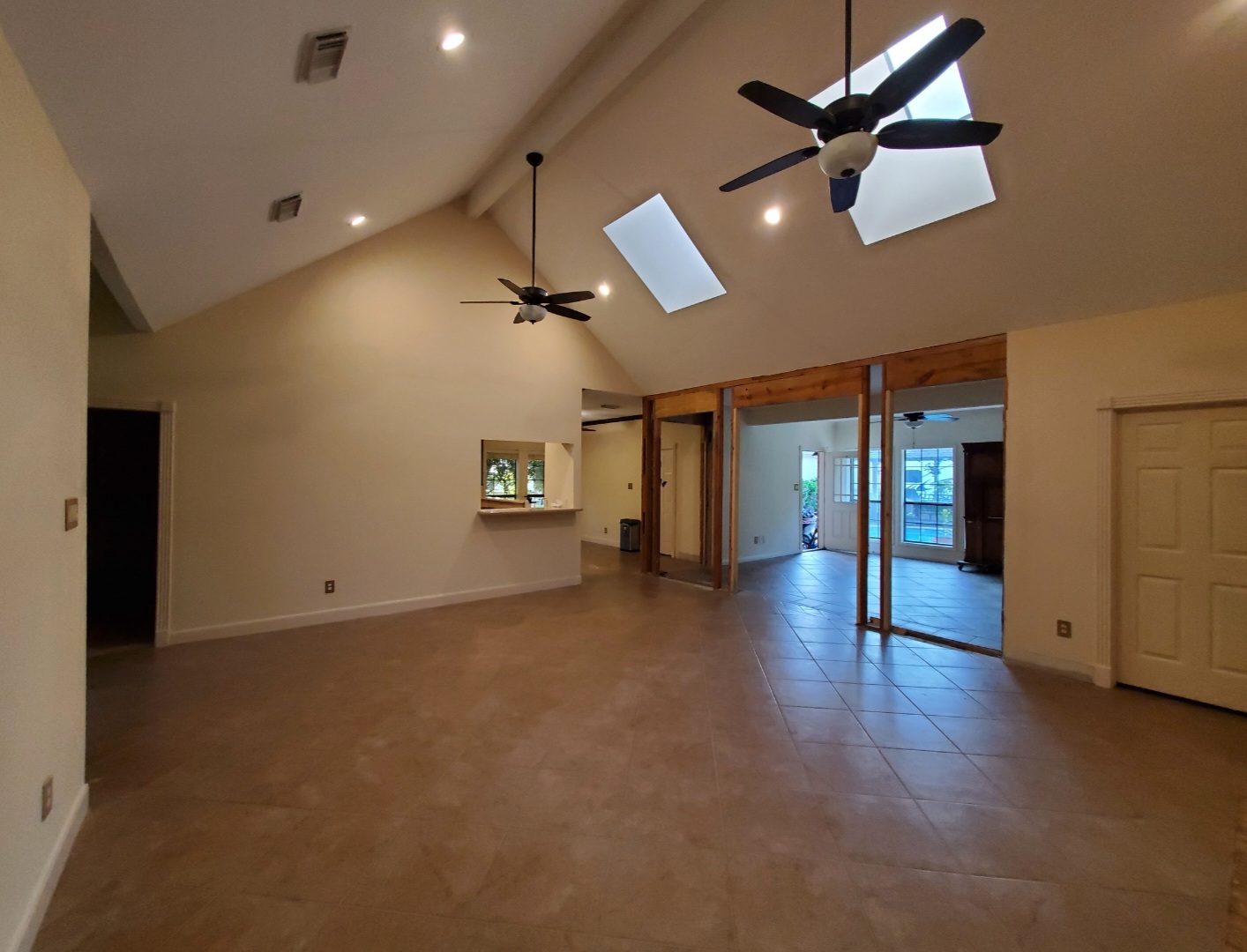
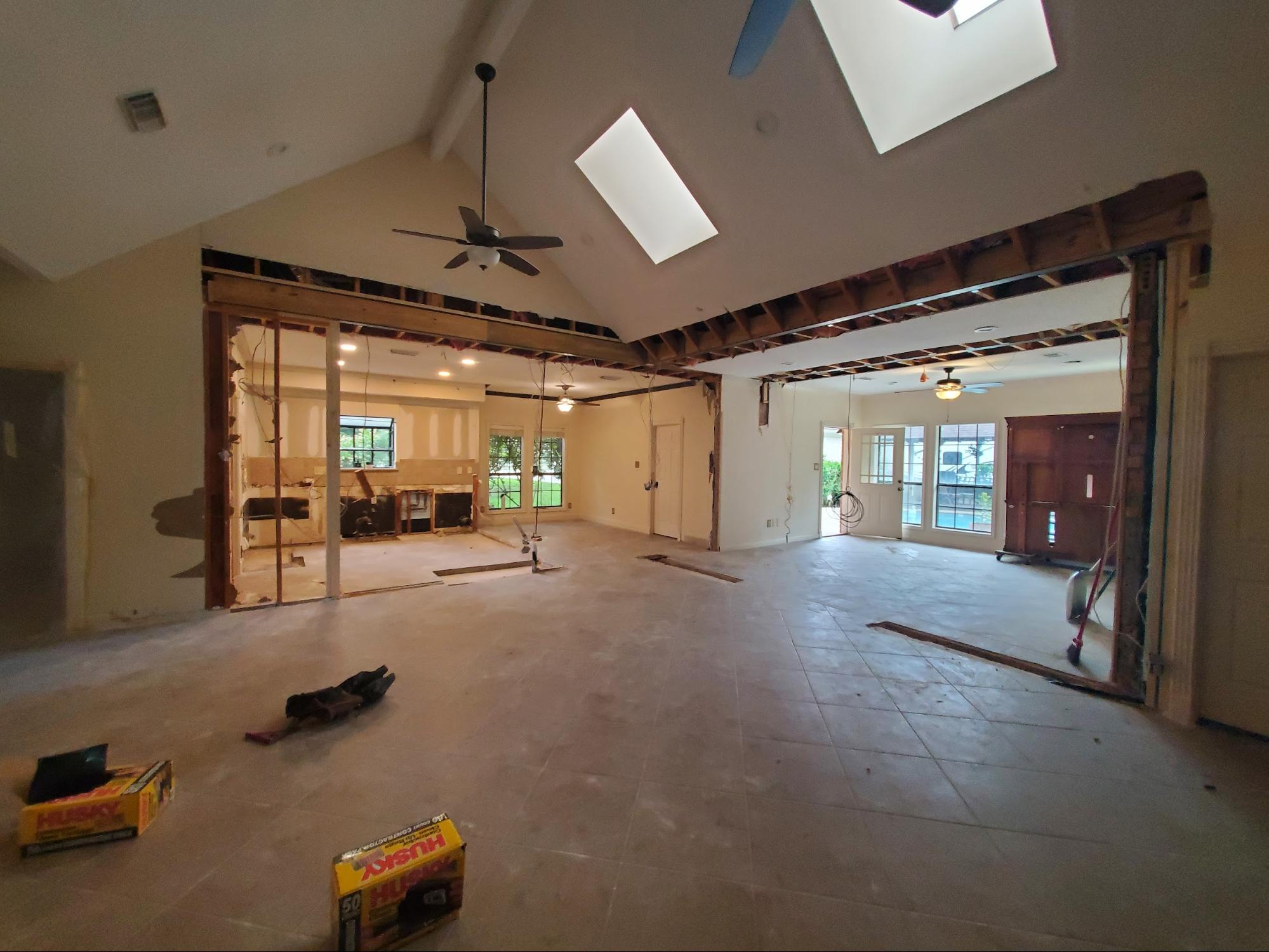
> ⭐️⭐️⭐️⭐️⭐️ "Load Bearing Wall Pros installed 3 beams in my home for an open concept renovation. They arrived early before 7:30, stayed busy, and had the last beam in place by 1pm. Josh and Isai were the crew leads and were very professional. This is ..." -- Buddy, Plano
The Checkpoint: How to Know What You're Dealing With
Every border crossing has a checkpoint. Before you start your open-concept revolution, you need to stop and verify what's actually in front of you.
Go vertical. Look at what's above the wall (another wall? a hallway? a bathroom?) and below it (a beam in the basement? a foundation wall?). If there's structure stacking vertically, your wall is almost certainly load-bearing.
Follow the joists. Walls that run perpendicular to ceiling joists are much more likely to be carrying load than walls running parallel. Head to the attic or basement and trace the framing.
Check the center of the house. Walls running through the middle of your home's footprint are prime suspects for structural duty. They're usually catching loads from both sides of the roof or floor system.
Get professional confirmation. The clues above are helpful, but they're not definitive. Only a structural professional can tell you WITH CERTAINTY which walls are structural and which are just standing around collecting dust.
At LBWP, we've assessed over 12,000 walls. We know in minutes what your walls are doing -- and more importantly, what it'll take to bring them down safely.
Tearing Down the Wall: The Engineering Revolution
Here's where Berlin meets Texas.
When the Berlin Wall came down, they didn't just run at it with hammers (okay, some people did). The actual demolition was planned. Controlled. Managed so that the city's infrastructure -- power lines, roads, buildings -- wasn't damaged in the process.
Your wall removal works the same way:
Step 1: Design the replacement. A structural engineer calculates what beam will take over the wall's job. This is the PLAN for reunification -- how the two sides will connect while keeping everything stable.
Step 2: Temporary support. Before the wall comes out, temporary posts or walls take over its structural role. This is the scaffolding that keeps everything steady during the transition.
Step 3: Controlled demolition. The wall is removed carefully -- drywall first, then studs, then plates. No chaos. No drama. Surgical precision.
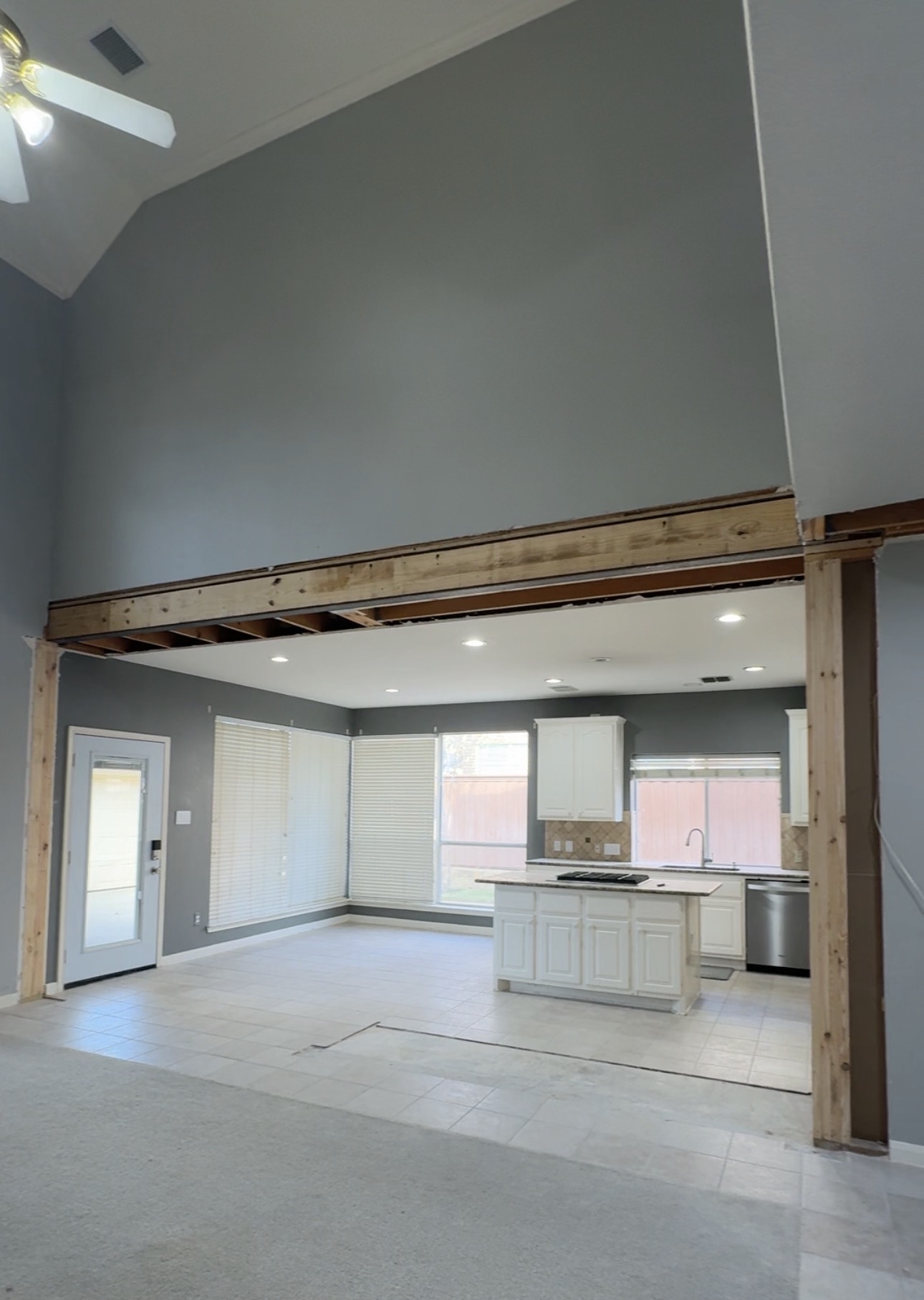
Step 4: Beam installation. The engineered beam goes in, connecting bearing points at each end. This is the NEW infrastructure that replaces the old barrier.
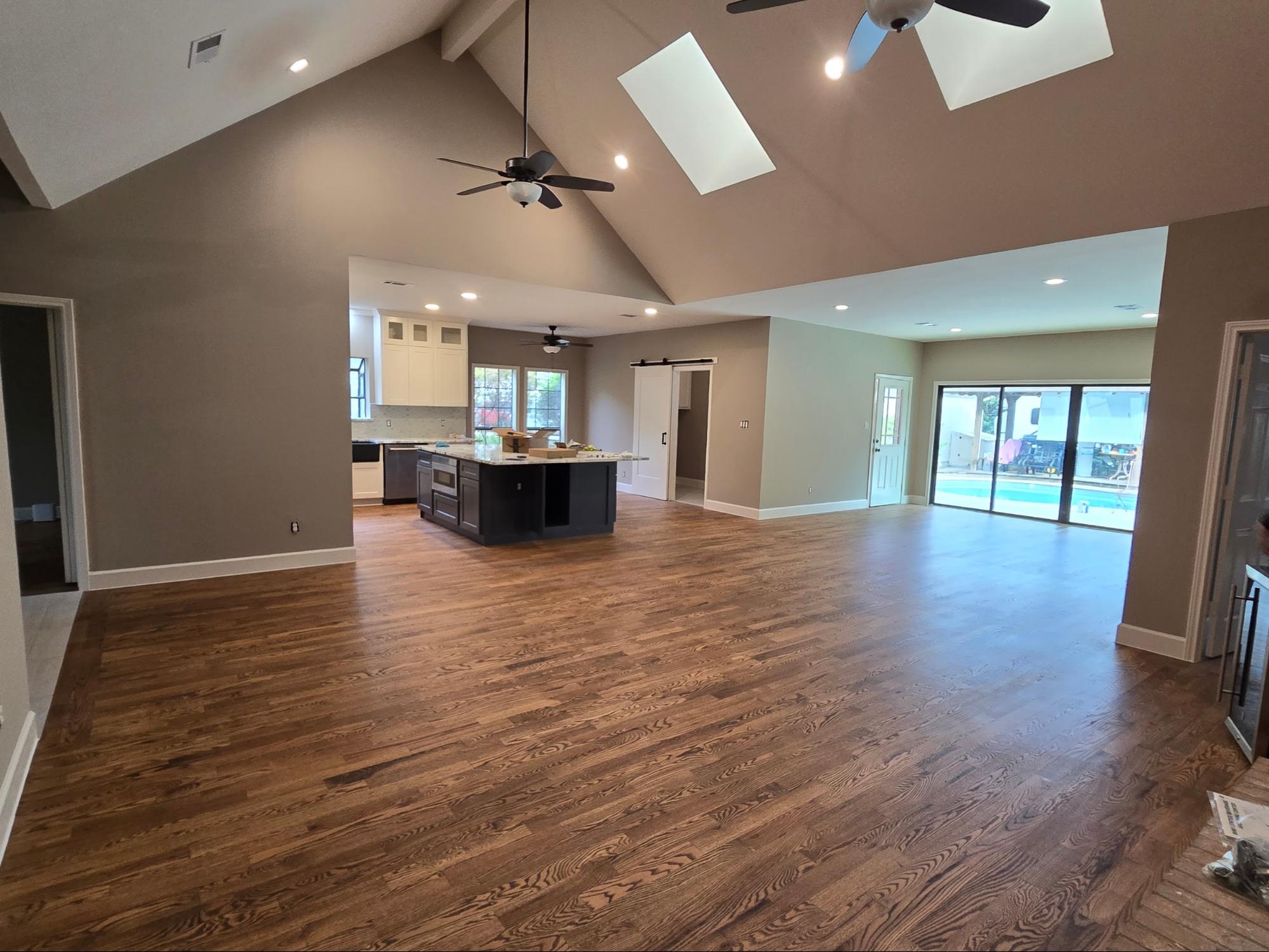
Step 5: The reveal. Temporary support comes down. The beam takes full load. And suddenly, your kitchen and living room are one space. Light flows. Air moves. The floor plan BREATHES.
> ⭐️⭐️⭐️⭐️⭐️ "Our experience with Load Bearing Wall Pros was so fast and efficient, we are wondering why we didn't do this sooner!" -- Clair Coop, Plano
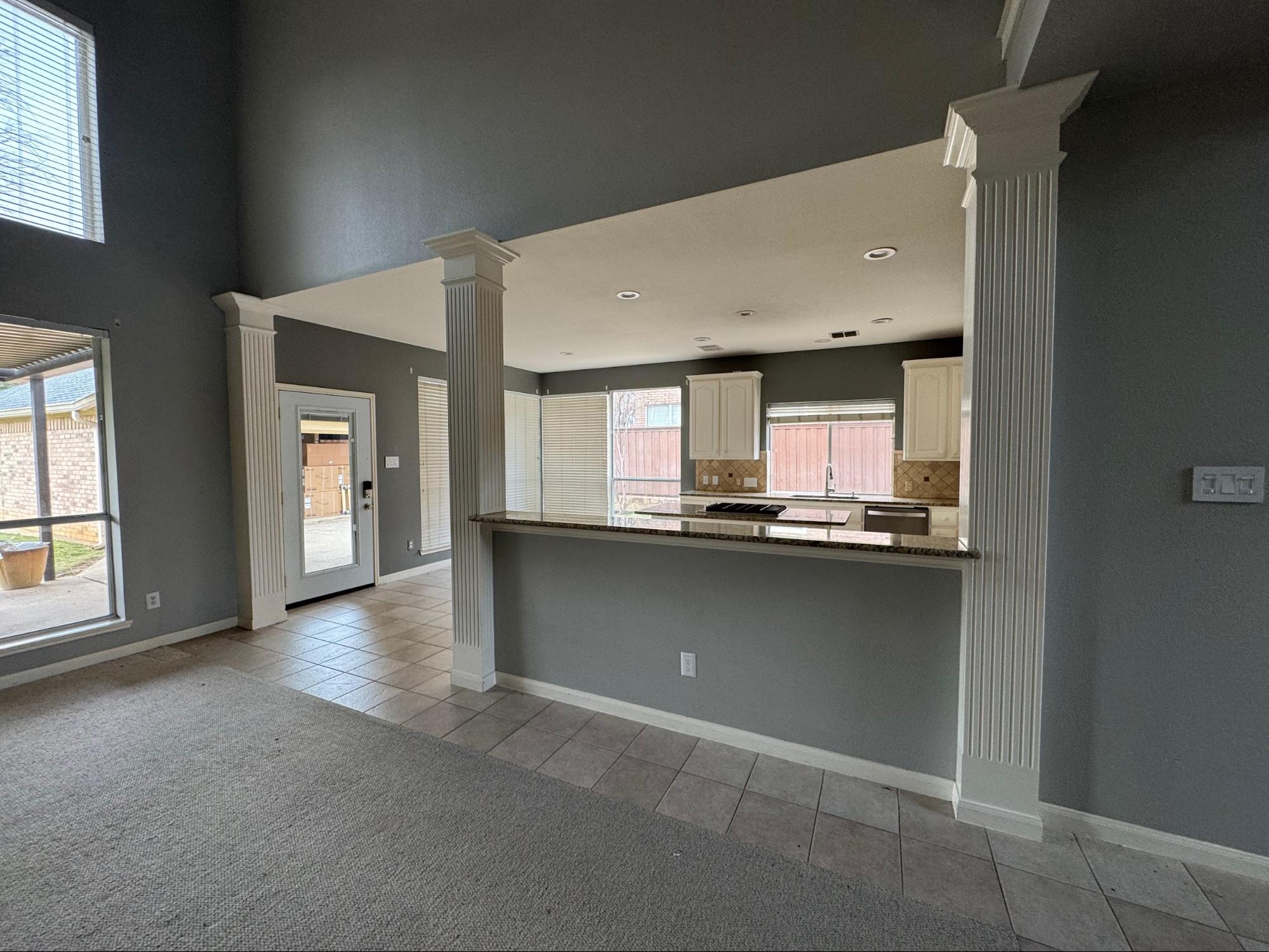
The New Republic: What Open-Concept Actually Gives You
Once the wall is down, the transformation is DRAMATIC. Here's what changes:
Light Freedom
Walls block natural light. That's their job -- they're walls. Remove one, and suddenly light from windows on BOTH sides of the former barrier reaches the entire space. South-facing windows now illuminate your kitchen AND living room. The afternoon sun doesn't stop at a wall anymore.
In Texas homes -- where we get 230+ sunny days a year -- this is a MASSIVE quality-of-life improvement. You'll use less artificial lighting during the day. The space will feel bigger. Your real estate photos will look 10x better (yes, that matters).
Social Freedom
The #1 complaint about closed floor plans: the cook is ISOLATED. You're in the kitchen making dinner while everyone else is in the living room watching the game. You can hear them laughing. You can smell the burnt popcorn. But you can't SEE them because there's a WALL in the way.
Open-concept fixes this instantly. The kitchen becomes the social hub. You cook, they hang out, everyone's in the same space. Parties flow. Holidays work better. Homework supervision happens naturally.
Value Freedom
Open-concept is the MOST requested feature in Texas home sales. Period. Full stop.
Real estate agents in DFW and Houston consistently report that open-concept kitchens add $15,000 to $30,000+ in perceived home value. That's not speculation -- that's market data from the people selling these homes every day.
And it makes sense. When buyers walk into an open floor plan, they FEEL the space. They see themselves living there. They don't feel the walls closing in. That emotional response translates directly into offer price.
Function Freedom
Open layouts give you more flexibility in how you use the space. The dining table can go anywhere. The kitchen island can serve as a homework station, a bar, and a buffet. Furniture arrangements aren't dictated by doorway locations and wall positions.
You go from "this is the only way the couch can face" to "we have OPTIONS." In 2026, flexibility IS the luxury.
The Speed Bumps: Real Considerations for Open-Concept
The freedom metaphor doesn't mean there aren't real considerations. Here are the honest trade-offs:
Sound travels. Without walls to absorb noise, an open floor plan can get LOUD. The dishwasher, the TV, the kids arguing about whose turn it is on the iPad -- it all blends together. Solution: rugs, soft furniture, acoustic panels, and strategic placement of the TV.
Cooking smells spread. Your seared salmon is going to announce itself to the entire first floor. Solution: a good range hood with proper ventilation. Not decorative -- FUNCTIONAL.
Visual clutter is visible. When the kitchen was hidden behind a wall, the pile of dishes was YOUR secret. Now everyone can see your sink. Solution: keep the kitchen cleaner (or don't -- we're not judging).
HVAC adjustments may be needed. Larger open spaces can affect how your heating and cooling system distributes air. A wall that once blocked airflow is now gone, and your HVAC might need minor adjustments to maintain even temperatures.
None of these are deal-breakers. They're speed bumps on the road to a better floor plan.
The Reunion: Making It All Come Together
The best open-concept transformations don't just remove a wall -- they DESIGN the new space intentionally. Think about:
Defining zones without walls. Use flooring transitions, lighting changes, ceiling height variation, or furniture placement to create visual "zones" within the open space. The kitchen zone. The dining zone. The living zone. All open, all connected, but each with its own identity.
Making the beam a feature. If your beam is exposed (a drop beam), lean into it. Stain it. Wrap it in reclaimed wood. Paint it to contrast. A visible beam can become an architectural element that ADDS character instead of just holding up the ceiling.
Planning the electrical. The removed wall probably had outlets, switches, or even a light fixture. Plan where those functions relocate BEFORE demolition, not after.
FAQ
Can any load-bearing wall be removed for open-concept?
Almost all can, as long as the load is replaced with a properly engineered beam. The span length, load above, and bearing points determine the beam requirements. LBWP has found solutions for virtually every situation across 12,000+ projects.
How much does it cost to go open-concept?
Typically $5,000-$15,000 for the structural work (wall removal + beam installation). Finishing work (drywall, flooring, paint) adds $1,000-$3,000 depending on scope.
Will I need to update my HVAC?
Possibly. Removing a wall changes airflow patterns. Most homes adjust naturally, but some benefit from minor ductwork or register modifications. An HVAC tech can assess after the project.
How long will the project take?
LBWP completes the structural work in ONE DAY. Finishing work is typically 1-3 additional days with a separate crew.
Do I need an architect, or just an engineer?
For most residential wall removals, a structural engineer is sufficient. An architect is helpful if you're doing a larger-scale renovation that includes layout redesign, cabinetry, or other design elements.
---
The wall doesn't have to stay. Call Load Bearing Wall Pros at 469-813-8143 (DFW), 713-322-3908 (Houston), or 512-641-9555 (Austin). Your freedom is one beam away.