


February 22, 2023

How To Safely Tackle Load Bearing Wall Projects In Cold Weather
Removing or modifying a load bearing wall is one of the most dramatic changes you can make to a home. It opens dark rooms, connects spaces that never quite worked together, and gives you the open concept layouts everyone wants. Most homeowners assume this kind of structural work has to wait for warmer weather. In reality, winter can be one of the safest and most strategic times to take on a structural project.
When the project involves a load bearing wall, guesswork is never an option. The safest way to begin is with a professional structural evaluation. You can schedule a structural consultation with Load Bearing Wall Pros’ experienced structural team to walk through your home, review your plans, and work with third party engineers who will design the right solution.
Why Winter Can Be A Smart Time For Structural Work
Winter is usually associated with staying inside and avoiding disruption, not opening up walls. But once you look past the snow and cold outside, the interior conditions of your home in winter often make structural work smoother, cleaner, and more predictable than in any other season.
Stable Indoor Conditions Help Beams Perform Better
During hot, humid months, wood framing and finishes absorb moisture and swell. As the seasons change, they dry out again and contract. That quiet cycle of expansion and shrinkage is a big reason drywall seams crack, trim separates, and floors develop small dips over time.
In winter, especially in a heated home, indoor air is typically much drier and more consistent. When a new beam is installed under those conditions, the surrounding framing moves less. The beam seats more predictably, the connections stay tight, and there is less seasonal movement to show up later as cracks or nail pops. Many engineers consider this indoor stability a hidden advantage of winter structural work.
Winter Work Sets Up A Head Start For Spring Renovations
Structural changes come first in almost every major remodel. If you are planning a new kitchen, new flooring, a larger opening between rooms, or a full main floor redesign, nothing truly starts until the structure is ready. By completing your load bearing wall project in winter, you put the most complex part of the job behind you before the busy season even begins.
When spring arrives, you or your general contractor can bring in trades for drywall, flooring, cabinets, lighting, and finishes without waiting on engineers or structural crews. Many homeowners who start with winter structural work are already installing cabinets or tile by the time other people are just beginning to think about renovations.
Scheduling Is Often Easier And Faster
Winter is rarely the peak season for big home projects. That lower demand affects the entire chain of people involved in a load bearing wall project: engineers, structural crews, and inspectors. Structural specialists tend to have more flexibility on their calendar, which often leads to shorter wait times for an assessment, quicker engineering turnaround, and more options for start dates.
Instead of lining up behind a long queue of spring and summer jobs, your project can move forward steadily. For homeowners who have already been waiting months or years to finally remove that interior wall, this can be the difference between “someday” and “done.”
How Cold Weather Actually Affects Structures And Beams
It is natural to wonder whether winter conditions make structural work riskier. In practice, when the work is done indoors by professionals, cold weather mostly changes how a project is planned, not whether it should move forward.
Material Behavior In Winter: What Really Changes
Wood and engineered wood products respond primarily to moisture, not just temperature. In winter, with home heating running and outside air dry, indoor moisture levels tend to be lower and more stable. That reduces the amount of swelling and shrinking in joists, studs, and subfloors.
Engineered beams are designed with these realities in mind. Laminated veneer lumber and similar products are manufactured to be strong, predictable, and stable across a wide range of environments. For homeowners or professionals who want deeper technical information on how wood behaves at different moisture levels, APA – The Engineered Wood Association provides detailed, nationally recognized guidance. Their resource on wood moisture content and performance explains why dry, controlled indoor conditions are ideal for structural framing and beam installation.
Steel beams behave differently. They do not swell with humidity, which makes them especially well suited for long spans and open layouts. In winter, when there is less condensation risk indoors and temperatures are controlled, both engineered wood and steel perform reliably as long as they are sized and installed according to engineering specifications.
Indoor Work Means Outdoor Weather Is Mostly Irrelevant
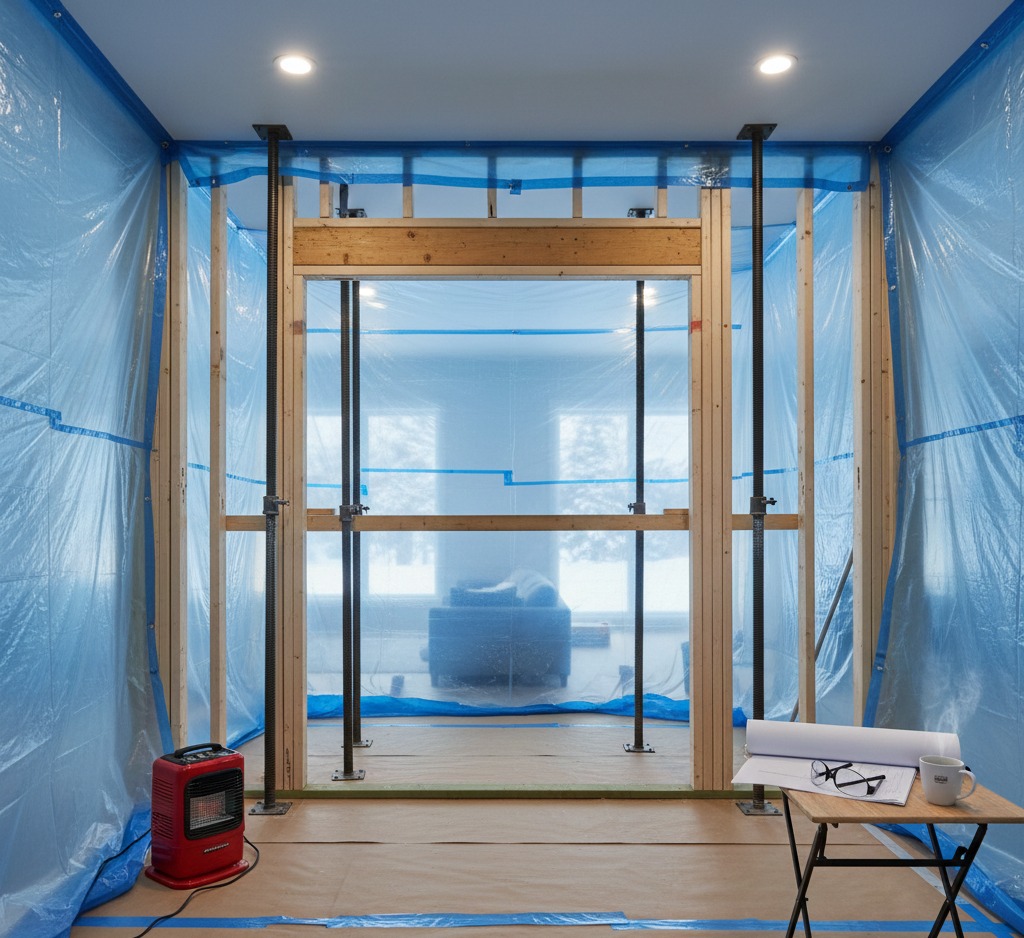
From the outside, winter looks harsh. Inside the home, a structural project takes place in a controlled environment. Crews set up dust barriers, floor protection, and temporary heating when needed. Tools and materials stay inside. The load bearing wall that is being removed is inside the building envelope, and so are the beam and supports that replace it.
That containment is why snow, rain, and low temperatures have little direct impact on a load bearing wall project. The project feels more like a carefully managed surgery inside your home than an outdoor build exposed to the elements.
Why The Load Path Still Matters In Every Season
No matter what month it is, the underlying principle is the same: the weight from your roof, upper floors, and structure must travel safely down to the foundation. A load bearing wall is one part of that path. When it is removed, there must be a clearly defined and engineered way for the load to transfer through a new beam and its supports.
That is why Load Bearing Wall Pros always partners with independent licensed engineers. Their job is to calculate the loads, design the beam and support layout, and specify how temporary supports will carry the structure during the transition. Our job is to follow that plan precisely. It is the same process in July or January, but winter’s more predictable indoor environment can make every step feel more controlled.
How Load Bearing Wall Pros Handles Winter Projects
Because we have more than two decades of experience, the entire business is built around doing this kind of work safely, cleanly, and efficiently in homes that are being lived in. Winter simply adds an extra layer of planning around comfort and separation from the rest of the home.
Structural Assessment And Engineering Design
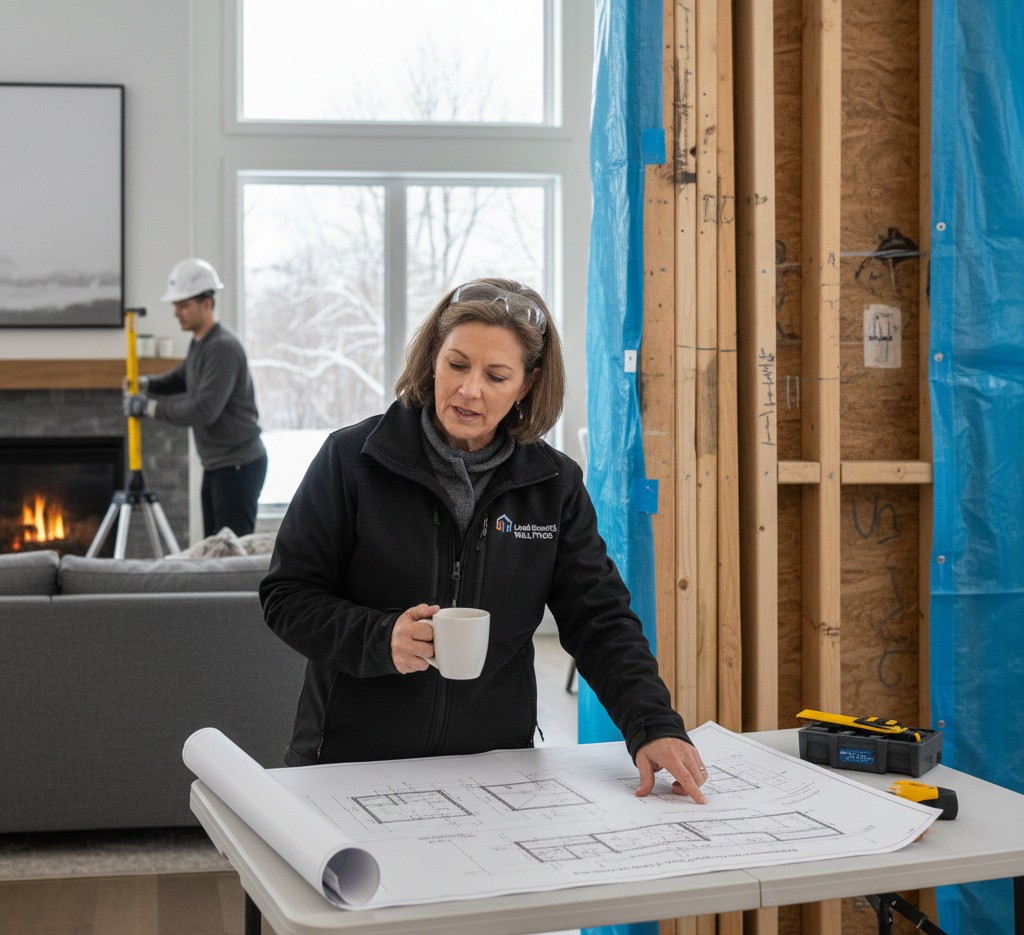
Every project begins with a structural assessment. A specialist walks the home, reviews the attic or basement framing when accessible, studies how existing walls line up with joists and beams, and listens carefully to what you want to change. This is the moment where we determine whether a wall is truly load bearing and how your long term vision fits with the structure you have.
From there, we connect with a third party licensed engineer who prepares stamped plans for the project. The plans specify beam sizing, bearing points, connectors, and temporary support requirements.
Preparing Your Home For Winter Structural Work
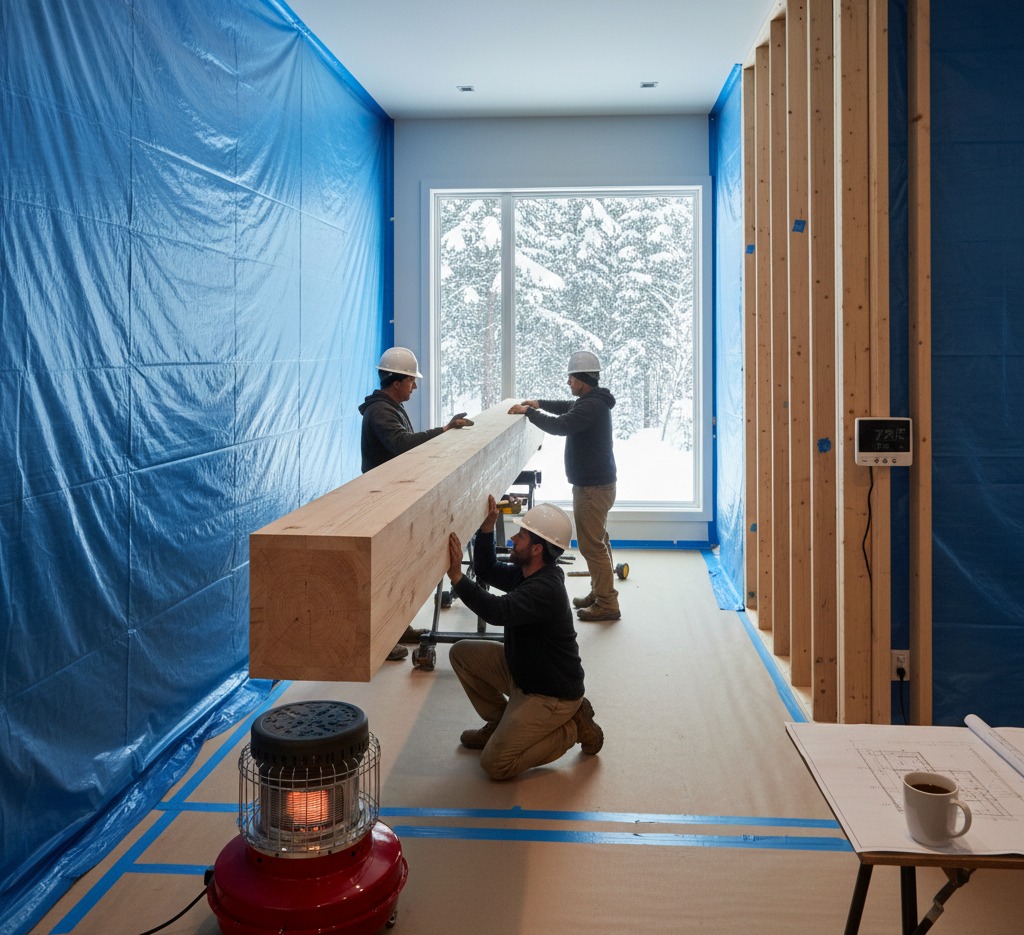
Once plans are in place, preparation begins. In winter, that means thinking about comfort as much as construction. The crew sets up plastic containment walls to isolate the work area, protects floors and nearby finishes, and plans how to move materials in and out with minimal disruption. If the work zone needs its own heating, temporary equipment is set up to keep both workers and materials in a safe temperature range.
For many homeowners, this is the moment when anxiety drops. Seeing the care taken to separate the construction area from the living area makes it clear that the project will not turn the entire house into a work site.
Temporary Supports, Wall Removal, And Beam Installation
With containment in place, the team installs temporary supports according to the engineer’s plan. These supports carry the weight that the load bearing wall was handling. Only after they are correctly installed and checked does any removal begin. The wall is then taken down gradually, exposing the framing and creating the new opening.
The beam is lifted and set into place, aligned carefully with the bearing surfaces the engineer specified. Winter’s stable conditions help the beam seat cleanly and allow the crew to see and correct any adjustments before the structure is fully closed up. Once the beam is secured, the temporary supports are removed and the structure begins working through the new load path.
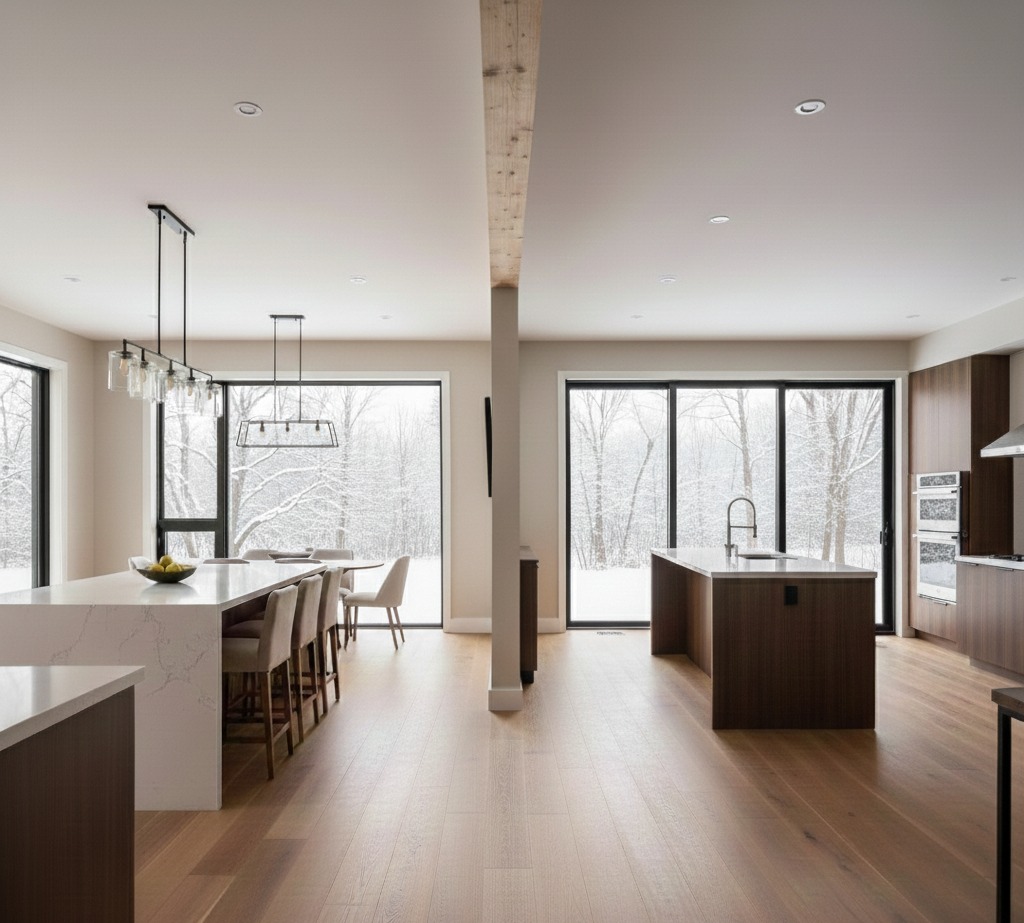
When the structural work is done, the space is ready for finishes. Depending on the level of service selected, Load Bearing Wall Pros may complete only the structural phase or manage additional finish work as part of a full remodel, while coordinating with licensed trades as needed.
Common Questions About Load Bearing Wall Projects in Cold Weather
Is it safe to remove a load bearing wall in winter?
Yes. Indoor work following stamped engineering plans is safe year-round. Success depends on proper assessment, support, and installation not the outdoor temperature.
Will my home feel cold or exposed during the project?
No. Work areas are sealed, heating is adjusted as needed, and doors/windows remain closed to the weather.
Can cold weather cause beams or framing to crack?
No. Indoor structures handle normal temperature changes. Winter’s lower indoor humidity can actually reduce post-project movement.
How long does a typical winter project take?
It varies with size and complexity, but 99% of our single-opening projects are en completed in one single day. Winter schedules can be easier to book.
Can I start a kitchen renovation right after the beam is installed?
Yes. Once inspections are passed, finish trades can begin immediately. Winter structural work often sets up spring renovations.
Start Your Winter Structural Project With Confidence
Winter does not have to be the season of waiting. For many homeowners, it becomes the season of progress, the time when the heaviest, most complex part of their renovation gets done while life inside the home carries on. Stable indoor conditions help beams perform better, lighter schedules make it easier to find a start date, and by the time spring arrives, the structure is ready and waiting for the exciting finishing work.
If you are ready to explore what is possible with that one interior wall you have been thinking about for years, the first step is simple. Talk to a team that does this work every day. Visit Load Bearing Wall Pros to schedule your free structural consultation and find out how a winter load bearing wall project can safely transform your home.
About the Author
Jason Hulcy, the founder of Load Bearing Wall Pros, is a seasoned expert in wall removal and home renovations. With a passion for innovation and sustainability, he has helped countless homeowners achieve their dream spaces safely and efficiently. Learn more about his expertise here.
Recent posts
-
-
 October 26, 2022