


February 22, 2023

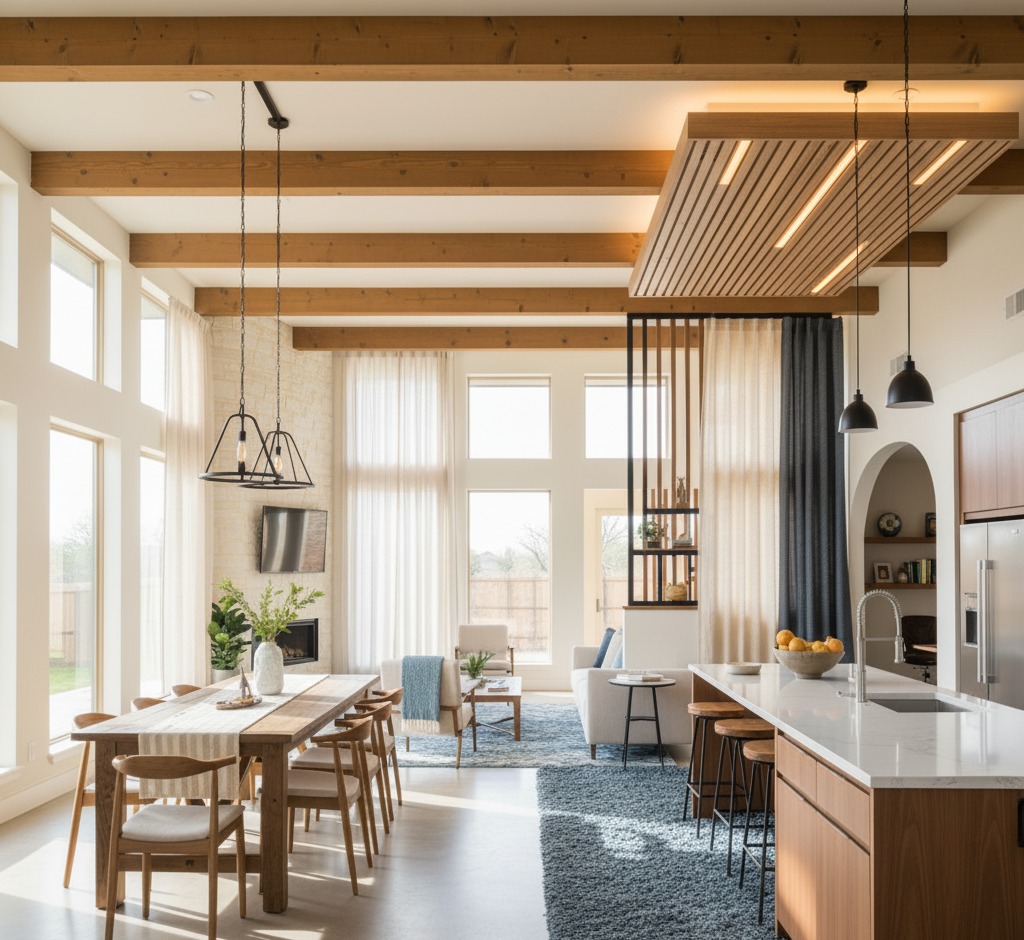
Can Zoning Techniques Maintain Privacy in Open Floor Plans?
Open floor plans remain one of the most popular home design trends in Texas blending the kitchen, dining, and living spaces into one continuous area that feels bright, modern, and social. Yet for all their benefits, open layouts often come with a trade-off: privacy. When walls come down, sound carries, sightlines open up, and personal boundaries can blur.
That’s where zoning techniques make all the difference. With careful design and a little engineering know-how, you can preserve the open feel you love while regaining comfort, quiet, and separation where it matters most.
Request a consultation with Load Bearing Wall Pros to explore open floor plan modifications that balance openness and privacy safely, structurally, and beautifully.
Understanding Privacy Challenges in Open Floor Plans
When you remove a load bearing wall, you change not only how a home looks but how it feels and functions. The visual connection between spaces increases social interaction but reduces acoustic and visual separation. Kitchens become visible from living areas, workspaces merge with play zones, and every sound from the blender to the TV becomes part of one shared environment.
For some homeowners, this openness feels energizing. For others, it quickly leads to noise fatigue and a sense of exposure. Families with children, people working from home, and multigenerational households often realize they need to reclaim boundaries without undoing their renovation.
That’s where zoning enters the picture: using subtle, intentional design strategies to divide space by function, flow, and feel rather than solid walls.
If you’re still in the planning phase, it’s worth revisiting how load bearing wall removal impacts sound, structure, and layout and how zoning solutions can be integrated from the start.
What Is Zoning in Home Design?
Zoning is the art of defining different functional areas within an open space without rebuilding walls. It uses materials, furniture, lighting, and partial structures to visually and acoustically separate zones. Think of it as invisible architecture: it shapes how a home is used and experienced.
Some zoning techniques are decorative, others structural. In many cases, zoning can even enhance safety and performance when coordinated with your home’s framing, beams, or ceiling loads. Consulting professionals ensures aesthetic changes don’t interfere with critical supports or beam selection after wall removal.
Here are several proven zoning approaches that preserve privacy while keeping the layout bright and connected.
1. Strategic Layout Planning
Every successful zoning project begins with flow analysis understanding how people move through space. When areas overlap too much, noise and activity migrate freely from one zone to another.
To solve this, divide your space by activity type:
- Quiet zones: reading nooks, offices, or bedrooms.
- Active zones: kitchen, dining, and entertainment areas.
- Transitional zones: entryways or hallways that buffer movement between active and quiet areas.
Even slight orientation changes like rotating a dining table or shifting a sofa can direct movement and sightlines to create psychological separation.
This kind of spatial choreography ensures an open layout still feels intentional and comfortable. Many designers pair this planning phase with a structural assessment to confirm that ceiling loads and floor joists support the desired flow after wall removal. For expert guidance, review our process for creating open floor plans safely.
2. Partial Walls, Columns, and Room Dividers
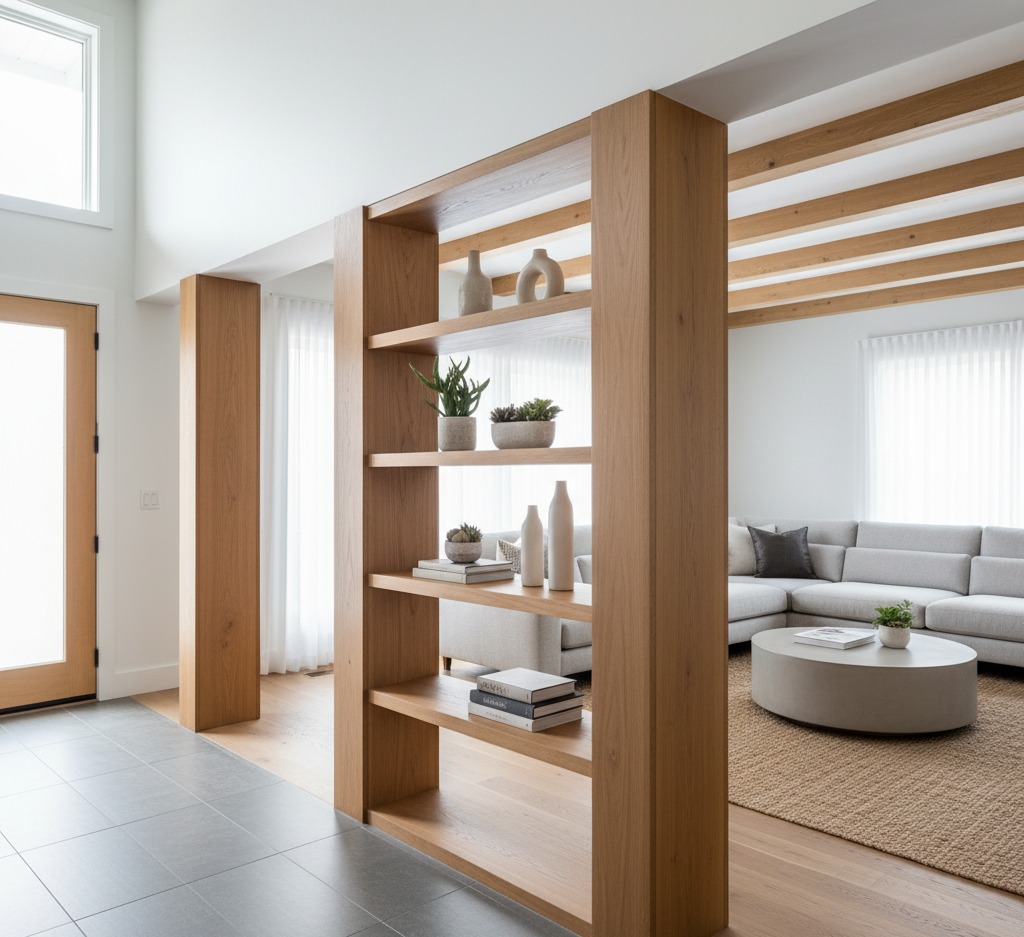
Sometimes, the best way to maintain privacy is to bring a bit of structure back strategically. Partial walls, glass dividers, or decorative columns define space without cutting off light.
For example:
- A half wall between the kitchen and living area preserves openness while blocking direct sightlines to cooking clutter.
- Built-in shelving or see-through partitions can double as storage while marking boundaries.
- Decorative columns or faux beams subtly echo the presence of former walls, restoring balance both visually and structurally.
If your original remodel involved removing a wall that carried load, adding these features often provides an opportunity to reinforce or conceal supports installed earlier. That’s where zoning and structural integrity work hand in hand and why collaboration with professionals matters.
When re-introducing any partial structure, follow Texas permitting and code guidelines to keep your renovation compliant and safe.
3. Sound and Light Control
Open floor plans magnify acoustics. A single conversation, TV show, or kitchen appliance can echo across multiple rooms. Soundproofing and zoning techniques that improve privacy often start with sound management.
Some effective acoustic zoning solutions include:
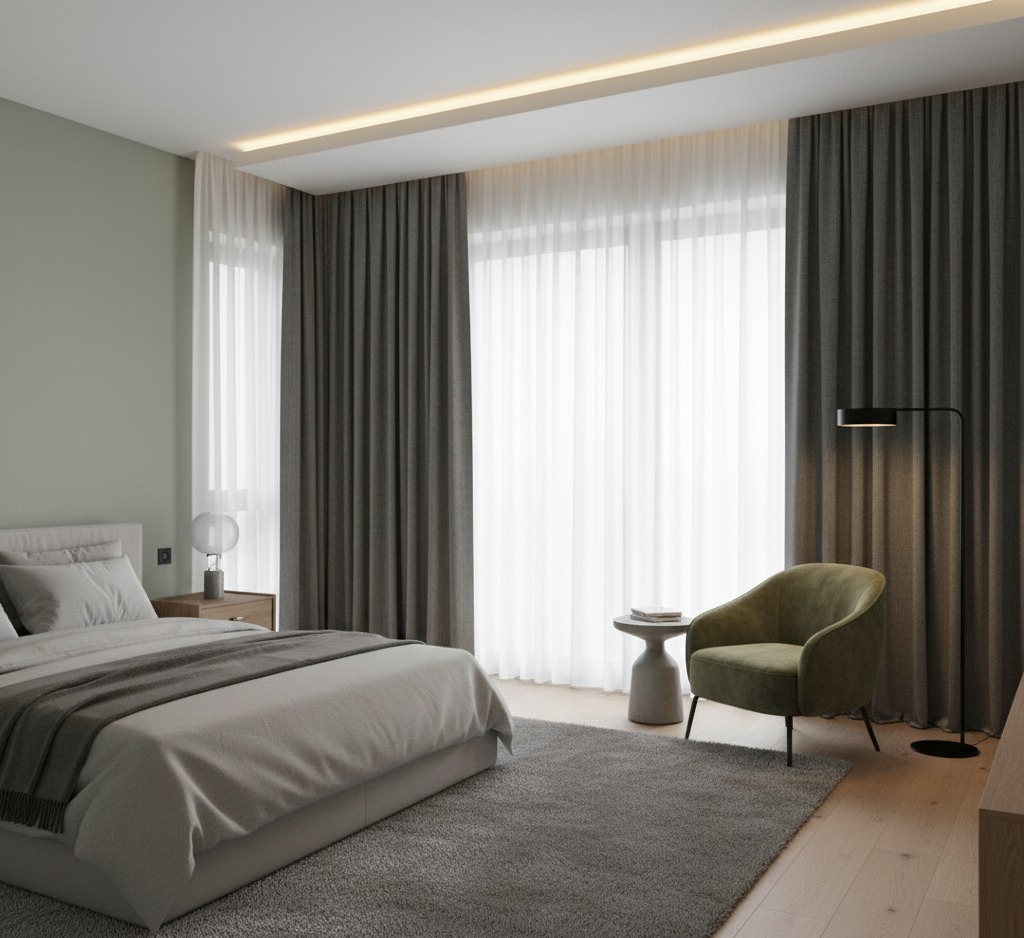
- Textile layering: rugs, curtains, and upholstered furniture absorb noise naturally.
- Acoustic panels or slatted wood ceilings: control echo while adding warmth and texture.
- Strategic lighting: use pendant lights, recessed fixtures, or dimmable zones to visually separate areas after dark.
Lighting plays a surprisingly strong psychological role in zoning bright, even light invites interaction, while targeted or diffused light encourages calm and focus. Combining these design cues with soft materials keeps the openness inviting but controlled.
For inspiration, architects often reference the American Institute of Architects’ sustainable architectural lighting guidelines for energy-efficient layering that enhances both comfort and performance in open floor plan design.
4. Furniture and Flooring as Boundaries
In open layouts, furniture placement becomes the new architecture. The back of a sofa can frame a conversation area; a large rug can define dining boundaries. Even flooring changes like transitioning from wood to tile create a subtle visual cue that one zone has ended and another begun.
This approach is particularly effective when remodeling around an existing beam or post left from wall removal. Integrating these structural elements into your layout can make the space feel designed rather than improvised.
When executed thoughtfully, furniture zoning preserves flexibility: you can rearrange or expand zones without additional construction, ideal for families whose needs evolve over time.
5. Visual Zoning Through Color and Materials
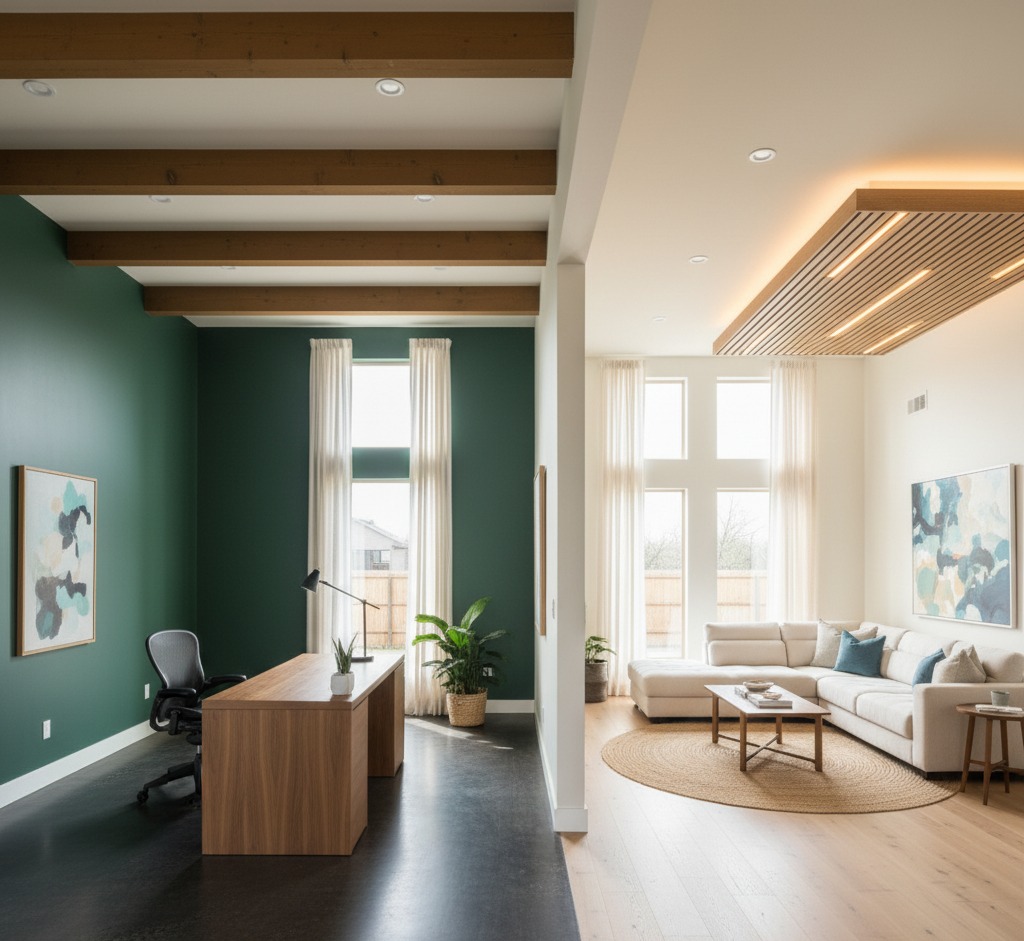
Color psychology and texture play powerful roles in creating privacy without barriers. Darker tones and matte finishes tend to visually recede, giving depth to quieter zones, while lighter colors reflect energy and openness.
You can use:
- Accent walls in private areas for visual grounding.
- Contrasting finishes between the kitchen and living spaces to signal transitions.
- Ceiling treatments or beams to emphasize separation while maintaining continuity.
Just ensure that any new material or beam detail complements your existing support structure. The wrong placement can affect weight distribution, so always consult a professional familiar with load bearing wall modification before construction.
Designing for Privacy Without Losing Openness
Zoning isn’t about putting walls back up, it’s about balance. The goal is to create invisible thresholds that give each area its own identity while keeping the overall space unified.
A well-zoned open plan lets you cook while chatting with guests, focus while others relax, or let children play safely within view. It allows privacy and togetherness to coexist.
When structural planning, furniture arrangement, and visual cues all align, the result is a space that feels intentional, peaceful, and completely personal to how you live.
If you’re starting from a remodel or planning a new design, our team at Load Bearing Wall Pros can help ensure your home’s openness is supported by proper engineering and thoughtful privacy solutions.
Balancing Design Freedom and Structural Safety
An open floor plan isn’t just a design choice, it’s a structural transformation. When walls come down, you’re changing how your home carries weight, handles sound, and manages energy flow. Zoning helps restore balance, but only when it’s planned with both aesthetic and engineering awareness.
Why Structure Still Matters in Open Layouts
Every load bearing wall plays a role in distributing vertical and lateral forces from the roof and upper floors down to the foundation. Removing or modifying these walls without proper reinforcement can cause sagging ceilings, cracks, or floor dips over time. That’s why zoning techniques should always work with the home’s structure, not against it.
Instead of simply dividing areas visually, you can integrate zoning elements into the existing framework. Exposed beams, for instance, can double as both support and design features, defining kitchen or living areas naturally. Similarly, columns and arches can create subtle divisions while maintaining load transfer, giving your space rhythm and strength.
If you’re planning major modifications, it’s best to collaborate with experts experienced in load bearing wall removal and structural planning. Their insight ensures your design choices stay safe and code-compliant.
Marrying Function, Flow, and Form
A successful open layout feels connected yet purposeful. Each zone should guide movement while reflecting how you actually live. A family that cooks and entertains often might prioritize visibility and openness, while remote workers may need quieter, acoustically isolated corners.
Well-designed zoning adapts to your lifestyle without forcing compromise. Lighting, color, and ceiling lines become tools for separation, while careful furniture placement reinforces pathways. Combined with professional engineering, these details turn an ordinary remodel into a home that’s both modern and timeless.
Ultimately, zoning isn’t just about reclaiming privacy, it’s about refining how a home works as a living system. When structure and design align, you get a space that feels open, safe, and perfectly tuned to daily life in Texas.
Common Questions About Open Floor Plan Zoning
What does zoning mean in an open floor plan?
Zoning divides an open layout into functional areas using design elements like furniture, lighting, or partial walls without rebuilding full walls.
Can zoning improve noise control?
Yes. Materials such as rugs, curtains, and acoustic panels help absorb sound, making each zone quieter and more comfortable.
Do zoning techniques affect load bearing walls?
Zoning itself doesn’t, but any structural additions or partial walls must align with the home’s load distribution. A professional engineer ensures modifications stay safe.
How can I make a kitchen feel separate without closing it off?
Use a peninsula, breakfast bar, or change in flooring to subtly define the cooking area. Pendant lights and lower ceiling beams can also help contain activity visually.
Is zoning a good option for small homes?
Absolutely. Thoughtful zoning makes small spaces feel larger by giving each area a clear purpose, improving flow and livability.
Creating Open Spaces That Still Feel Private
Zoning techniques can maintain privacy in open floor plans when structure, style, and comfort work together. By using layout planning, partial dividers, acoustic control, and visual cues, homeowners can enjoy the freedom of open living without sacrificing peace and personal space.
For lasting results, always pair design creativity with engineering expertise.
Load Bearing Wall Pros ensures your open floor plan remains both beautiful and structurally sound every wall removed, every beam installed, and every zone defined with precision.
Start your project today and discover how strategic zoning can shape an open floor plan that feels spacious, stylish, and distinctly your own.
About the Author
Jason Hulcy, the founder of Load Bearing Wall Pros, is a seasoned expert in wall removal and home renovations. With a passion for innovation and sustainability, he has helped countless homeowners achieve their dream spaces safely and efficiently. Learn more about his expertise here.
Recent posts
-
-
 October 26, 2022