


February 22, 2023

DIY vs Professional Contractors: When to Call an Expert for Structural Wall Changes
Few home improvement decisions create more confusion than structural wall changes: online videos make wall removal look simple, renovation shows compress months of planning into a single episode, social media tutorials often blur the line between cosmetic demolition and structural modification. For homeowners, it can be difficult to know when a project is truly DIY-friendly and when it crosses into territory that demands professional expertise.
Structural wall changes sit squarely in that gray area. Removing or modifying a load bearing wall can dramatically improve how a home looks and functions, opening dark spaces and creating better flow. At the same time, that decision alters how weight moves through the whole structure. Floors, ceilings, and foundations all depend on those load paths, as well as insurance coverage, resale confidence, and long-term safety.
If you are trying to decide whether a structural wall change is something you can handle yourself or whether it is best to bring in an expert, this guide breaks down the real differences, the risks, and the moments when professional involvement is not optional.
If you want to understand how structural decisions affect safety, insurance, and long-term value, take a moment to explore the insights below. They are designed to help you make informed choices, avoid costly mistakes, and move forward with confidence.
Understanding the Difference Between Cosmetic and Structural Walls
One of the most common DIY mistakes starts with a simple assumption: that all walls behave the same way. In reality, walls fall into two fundamentally different categories:
- Cosmetic walls exist to divide space. Removing them usually does not change how the home carries weight.
- Structural walls, on the other hand, support loads from above. They may carry roof loads, upper floors, or beams that transfer weight down to the foundation.
The challenge is that a load bearing wall does not always look structural. It can appear identical to a nonstructural partition, especially in finished interiors where framing is hidden. Without understanding framing direction, load paths, and how forces travel through the building, it is nearly impossible to determine a wall’s role by appearance alone.
This uncertainty is where many DIY projects begin confidently and end with hesitation once the drywall comes off.
Why Structural Wall Changes Are Different From Other DIY Projects
Many home improvement tasks are forgiving – painting, flooring, cabinetry, and trim work can often be corrected if mistakes are made. Structural wall changes are different because they are cumulative and permanent.
Once a load bearing wall is altered, the home depends entirely on the new configuration. There is no margin for trial and error. Small misjudgments in support placement, beam sizing, or alignment may not cause immediate failure, but they can lead to sagging floors, cracked drywall, misaligned doors, and even progressive structural movement over time.
This is why engineers, inspectors, and insurance carriers treat structural changes differently. They’re not concerned about aesthetics, but about predictability, stability, and documentation that proves the work was done correctly.
What DIY Structural Work Really Looks Like in Practice
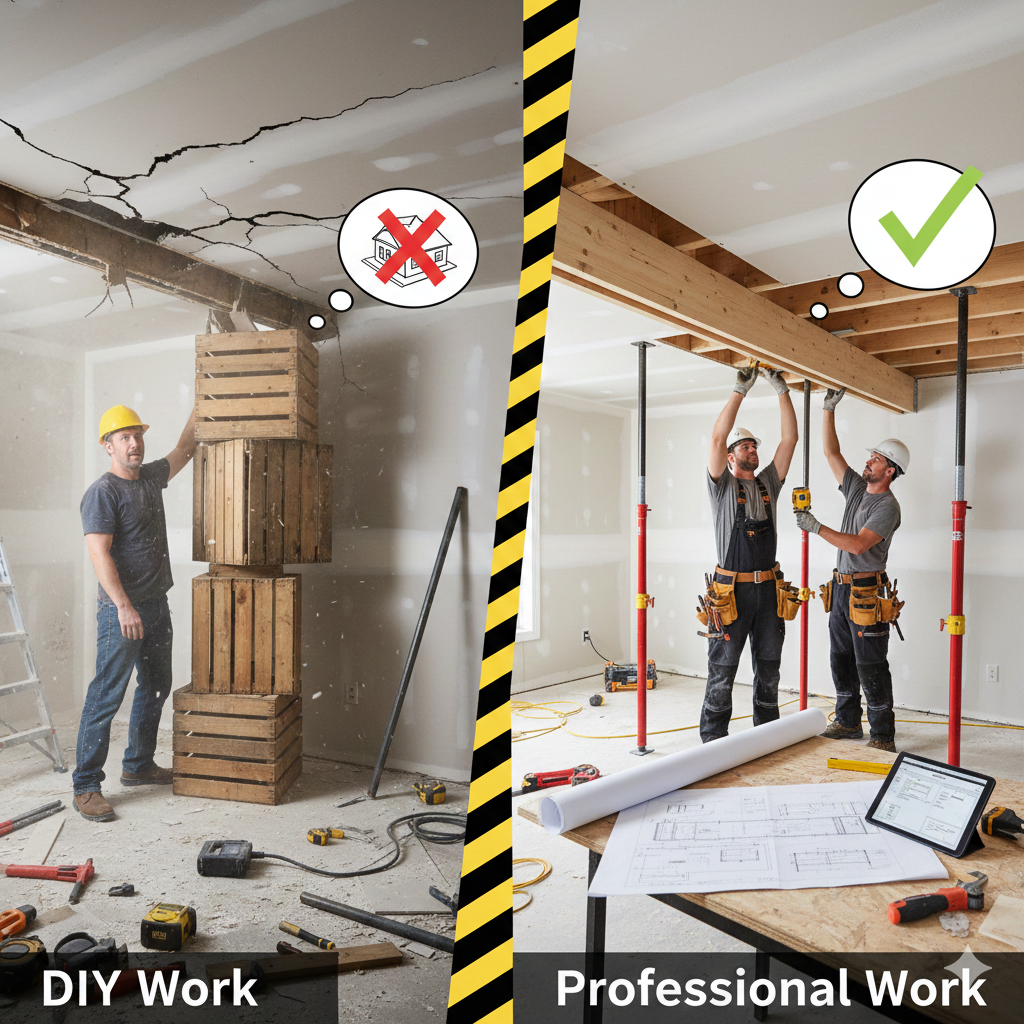
Some homeowners think DIY structural work simply means performing labor themselves. In reality, it often involves making engineering decisions without the training or tools to verify them.
Common DIY assumptions include believing a wall is not load bearing because it looks small, assuming a ceiling is fine because it does not crack immediately, judging a beam’s adequacy by appearance, or trusting temporary supports because they feel solid.
These assumptions are risky because structural behavior is not always immediate: loads redistribute slowly, and deflection and settlement can occur over weeks or months. By the time symptoms appear, repairs are far more complex and expensive than doing the work correctly from the beginning.
When DIY Work Can Be Reasonable
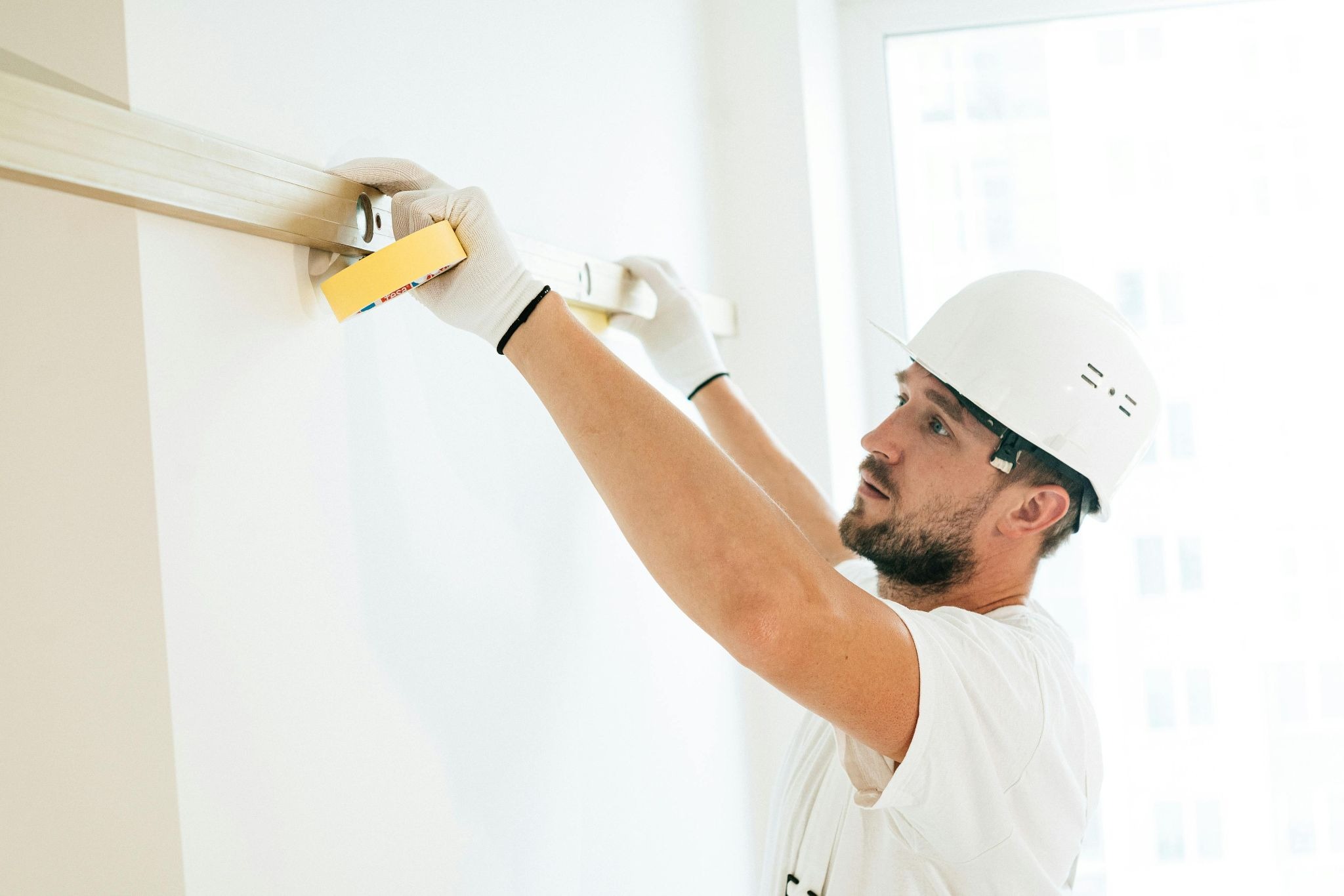
There are limited situations where homeowners can safely perform work related to walls without professional involvement. These situations typically involve preparation or cosmetic tasks rather than structural decisions.
DIY work may be reasonable when removing drywall to inspect framing, opening a wall for plumbing or electrical access without altering framing, repairing finishes after structural work is complete, or removing a confirmed nonstructural partition wall.
Even in these cases, confirmation matters. A wall that appears nonstructural may still play a role in bracing or load distribution. The safest DIY projects are those performed after a professional has already verified what is and is not structural.
The Moment a Structural Expert Becomes Necessary
There is a clear point where DIY work should stop and professional involvement should begin. That point is reached the moment a project affects how the home carries weight.
Professional expertise is required when a wall may be load bearing, when a beam is needed to replace a wall, when temporary supports must carry loads during removal, when upper floors or roof structures are involved, when large openings are created, or when an open concept layout is planned.
Generally speaking, these are not design decisions – they are engineering decisions with long-term consequences.
Why Engineering Is Not Optional for Structural Wall Changes
Structural wall changes affect how the entire home carries weight, which is why professional engineering is essential for safety, compliance, and long-term protection.
Engineering Defines How Loads Move Through Your Home
Every safe structural wall modification begins with engineering. Before framing is altered, an engineer evaluates how loads move through the home, what the wall currently supports, and how those loads will be transferred once the wall is removed.
Engineering transforms invisible forces into measurable requirements. An engineered plan specifies beam size and material, bearing locations, post support requirements, temporary shoring placement, and acceptable deflection limits. These calculations ensure the structure behaves as intended under real-world conditions.
Engineering Plans Protect Long-Term Safety and Insurance Clarity
Without stamped engineering calculations, even experienced contractors are forced to rely on assumptions. For homeowners, skipping engineering is one of the fastest ways to create insurance complications. Structural changes completed without proper documentation can raise concerns during resale, inspections, or insurance claims.
Insurance carriers rely on engineering documentation because it provides objective proof that the modification preserved or improved structural safety. If a future claim involves the modified area of the home, these records often determine whether the claim proceeds smoothly or requires extensive verification.
Structural engineering practices are guided by nationally recognized standards developed by organizations such as the American Society of Civil Engineers, which establishes professional benchmarks for evaluating structural systems and load behavior across residential and commercial construction.
How Professional Structural Contractors Differ From General Remodelers
Not all contractors approach structural work the same way, and understanding this distinction is critical when safety and insurance protection are involved.
Structural Specialists Focus on Load Paths, Not Finishes
General remodelers typically focus on finishes, layout, and visual outcomes. Structural contractors focus on how weight travels through framing, how beams and joists respond under load, and how changes affect the home years after completion.
Their expertise lies in execution, not appearance. They understand how to support structures during transition, how loads shift when walls are removed, and how to seat beams so weight is distributed correctly.
Experience With Engineering Execution Matters
Professional structural contractors know how to follow stamped engineering plans precisely. They install and verify temporary supports before demolition begins, coordinate closely with engineers, and document each phase of the structural process.
This level of precision ensures the home performs predictably long after visible work is finished and provides clear records for inspectors, insurers, and future buyers.
The Hidden Costs of DIY Structural Mistakes
What initially appears to be a cost-saving DIY decision often creates long-term risks that outweigh any upfront savings.
Structural Errors Often Appear Long After the Project Ends
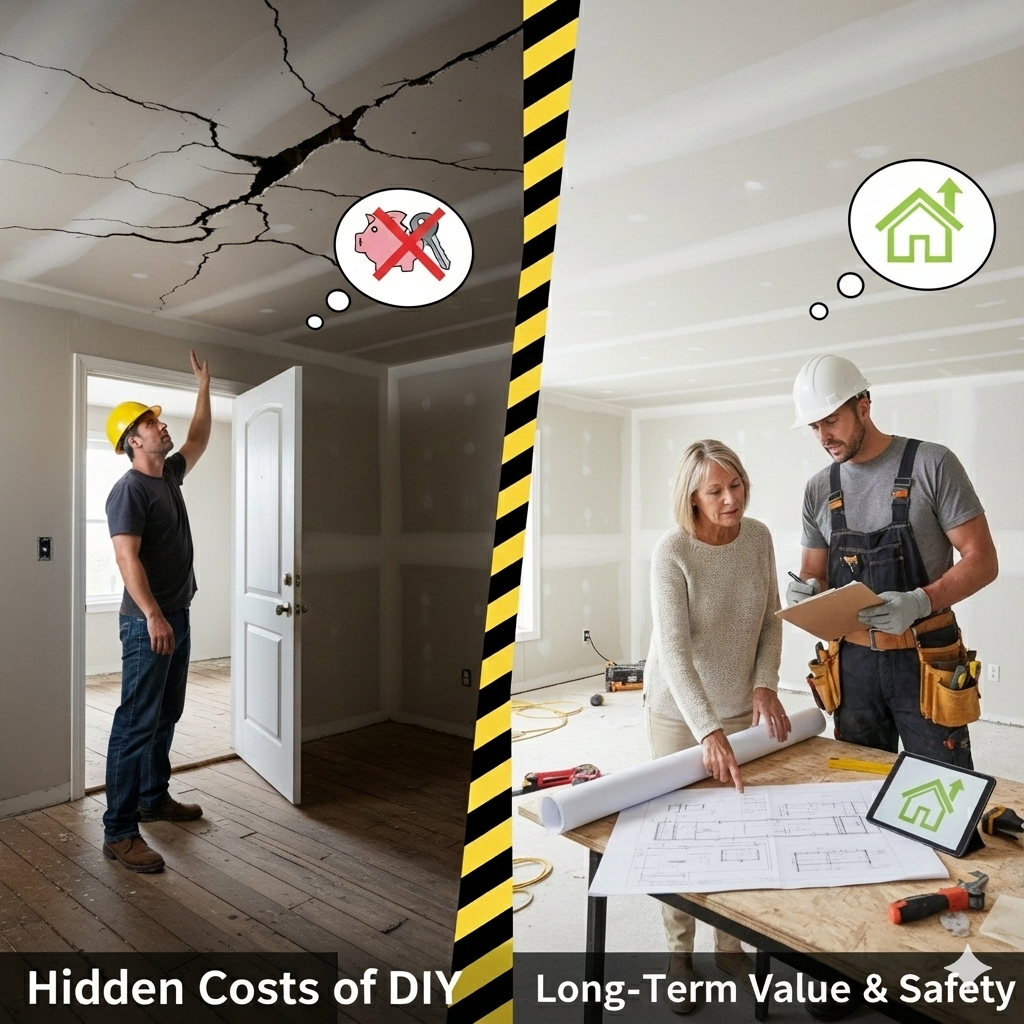
Many structural mistakes do not reveal themselves immediately. Floors may begin to dip, drywall may crack, or doors may go out of alignment months or even years after the work is completed.
Correcting these issues often requires corrective engineering, reframing of floors or ceilings, and in some cases foundation reinforcement. These repairs typically cost far more than professional involvement would have from the start.
DIY Mistakes Can Complicate Insurance and Resale
Beyond repair costs, poorly executed structural work can slow insurance claims and reduce buyer confidence during resale. Insurers may require additional inspections if damage is linked to undocumented structural changes. Buyers may hesitate when they cannot verify how a wall was removed or supported.
Even when coverage is not denied, the claims process can become longer and more complex. What began as a DIY effort can quietly turn into a long-term financial and logistical burden.
Why Insurance Companies Care Who Does the Work
Insurance policies are built around risk assessment. Structural changes alter that risk profile. Insurers do not automatically penalize homeowners for making improvements, but they expect those improvements to be done correctly.
Professional structural work provides stamped engineering plans, a clear scope of work, photographic documentation, traceable responsibility, and predictable material behavior. These elements protect homeowners if questions arise later. DIY work rarely offers the same level of clarity.
Structural Wall Changes and Long-Term Home Value
Beyond safety and insurance, structural decisions influence resale value. Buyers and inspectors often ask whether walls were removed and how the work was completed.
Homes with professionally documented structural changes inspire greater confidence than homes with undocumented modifications. Clear records reassure buyers that layout improvements were made responsibly and reduce concerns about hidden issues.
This matters especially for open concept homes, where large openings rely entirely on proper beam design and installation.
How Load Bearing Wall Pros Approaches Structural Wall Changes
Our process begins with evaluation and coordination with independent licensed engineers. We follow stamped plans precisely, install temporary supports correctly, and document the structural phase thoroughly.
When the structural work is complete, the home is ready for finishing trades to proceed with confidence.
Knowing When Confidence Should Turn Into Caution
DIY confidence is valuable. It helps homeowners understand their homes and participate in renovation decisions. But confidence should become caution when a project affects safety, structure, and long-term performance.
Structural wall changes are one of those moments. When a project involves carrying weight, transferring loads, or altering framing, professional expertise is not an upgrade. It is a requirement.
Common Questions About DIY vs Professional Structural Wall Changes
Can I remove a load bearing wall myself if I add supports?
Temporary supports must be designed and placed correctly. Without engineering guidance, this is unsafe and can cause damage.
Is engineering really necessary if the opening is small?
Yes. Even small openings can carry significant loads depending on framing direction and span.
Will insurance cover damage caused by DIY structural work?
Coverage may be limited if damage is linked to undocumented or improperly executed structural modifications.
Can I hire a general contractor instead of a structural specialist?
General contractors may handle finishes well, but structural work requires specialized experience and engineering coordination.
Is professional structural work more expensive than DIY?
Upfront costs may be higher, but professional work often prevents costly corrections, delays, and insurance complications later.
Making the Smart Call for Your Home
Every renovation involves choices. Some are design choices. Some are budget choices. Structural wall changes are safety choices.
DIY work has its place, but when a project alters how your home carries weight, professional expertise protects more than just the structure. It protects insurance coverage, long-term value, and peace of mind.
If you are considering a structural wall change and want clear guidance before making a decision that affects your home for decades, the smartest first step is a professional evaluation.
Contact Load Bearing Wall Pros to schedule your structural consultation and get clear guidance before making a decision that affects your home for decades to come.
Your structure deserves expert care.
About the Author
Jason Hulcy, the founder of Load Bearing Wall Pros, is a seasoned expert in wall removal and home renovations. With a passion for innovation and sustainability, he has helped countless homeowners achieve their dream spaces safely and efficiently. Learn more about his expertise here.
Recent posts
-
-
 October 26, 2022