


February 22, 2023


What Removing a Load Bearing Wall Really Involves
Removing a wall can dramatically change how a home feels. Rooms open up, natural light travels farther, and everyday movement through the space becomes easier. For many homeowners, wall removal is the project that finally makes the house work the way they want it to.
But when that wall is load bearing, the project becomes structural, not merely cosmetic.
Before planning any demolition, speak with a load bearing wall removal specialist. Knowing what the wall does and how its load will be safely replaced is essential to protect the home and avoid long-term structural issues.
This guide explains how load bearing wall removal works, why structure must come first, and what needs to happen for the project to be done safely and correctly.
What a Load Bearing Wall Does and Why It Matters
A load bearing wall plays a critical role in how a house stands. It supports weight from above and transfers that load down through the structure to the foundation. Without that wall, the structure above would have no direct path to safely carry its weight.
Understanding this role is the foundation of any safe wall removal project.
How load moves through a home
In most homes, weight travels downward in a predictable path: roof framing transfers load to walls, upper floors transfer load to walls below, and those walls then carry the weight down to the foundation.
A load bearing wall sits directly in that path, which means that removing it interrupts the load path unless something else replaces it.
This is why professional load bearing wall removal always includes a structural replacement, usually in the form of a beam system designed to carry the same load the wall once supported.
Why interior walls can still be structural
Many homeowners assume that only exterior walls are load bearing. While exterior walls are almost always structural, interior walls can be just as important.
In multi story homes, split-level designs, or older houses, interior walls often support floor systems above. Their location may feel convenient for removal, but their function may be essential.
Reviewing real-world examples of removing a load bearing wall to create an open floor plan helps show why interior walls must be evaluated carefully before any work begins.
How Professionals Determine Whether a Wall Is Load Bearing
Determining whether a wall is load bearing is not guesswork. It requires understanding how the house was framed and how loads are distributed throughout the structure.
This evaluation is one of the most important steps in the entire process.
Framing direction and load paths
Professionals begin by examining floor joist and ceiling joist direction. Walls that run perpendicular to joists are more likely to be load bearing, but this alone is not definitive.
They also look at what is above and below the wall: if another wall, beam, or point load sits directly above, that increases the likelihood that the wall is structural.
Why plans and visual inspection matter
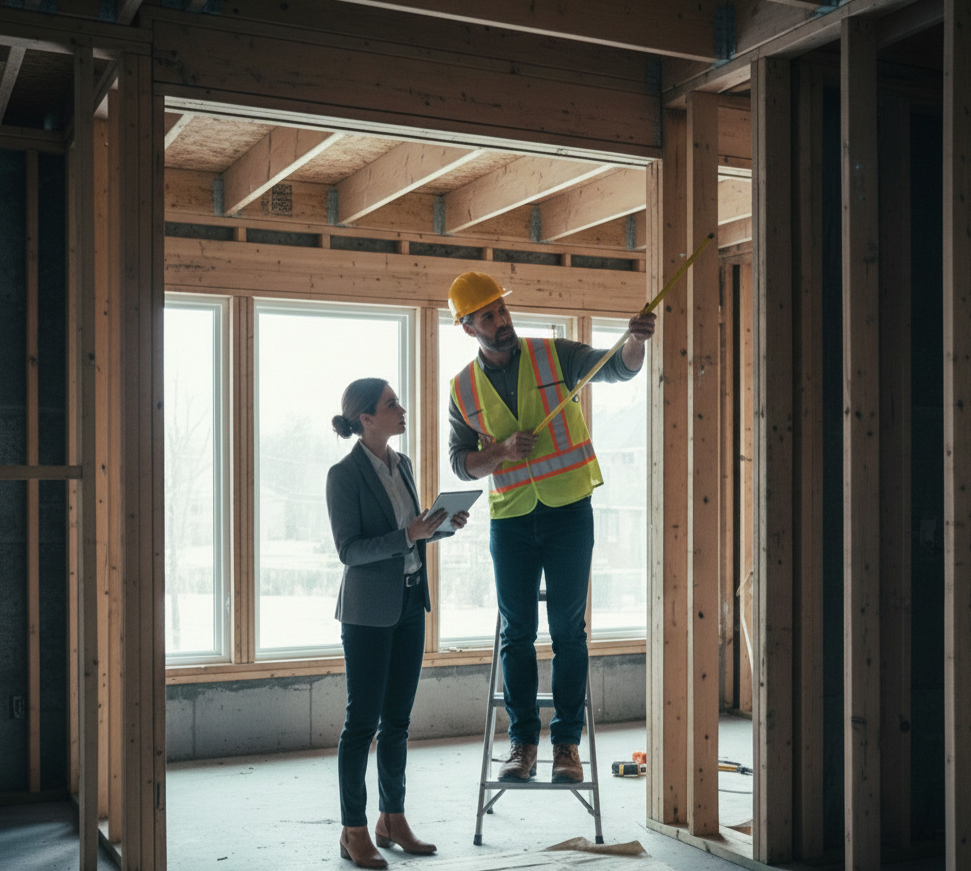
Original building plans can be helpful, but many homes have been altered over time. Additions, remodels, and previous wall removals can change how loads are carried.
Because of this, professionals often verify conditions by opening limited sections of drywall to inspect framing connections directly. This ensures decisions are based on reality, not assumptions.
A detailed overview of this evaluation process is covered in what is involved in removing a load bearing wall, which explains how professionals confirm structure before demolition begins.
Planning the Removal: Permits, Preparation, and Temporary Support
Once a wall is confirmed as load bearing, planning becomes the focus, and a sequence of steps designed to protect the structure throughout the process must take place.
Skipping planning steps is where projects go wrong.
Permits and structural responsibility
In many jurisdictions, removing a load bearing wall requires approval because it affects the structural integrity of the home. Requirements vary, but the underlying purpose is the same: to ensure the load is properly replaced.
Permits reflect the need for accountability when modifying structural systems.
Temporary support is not optional
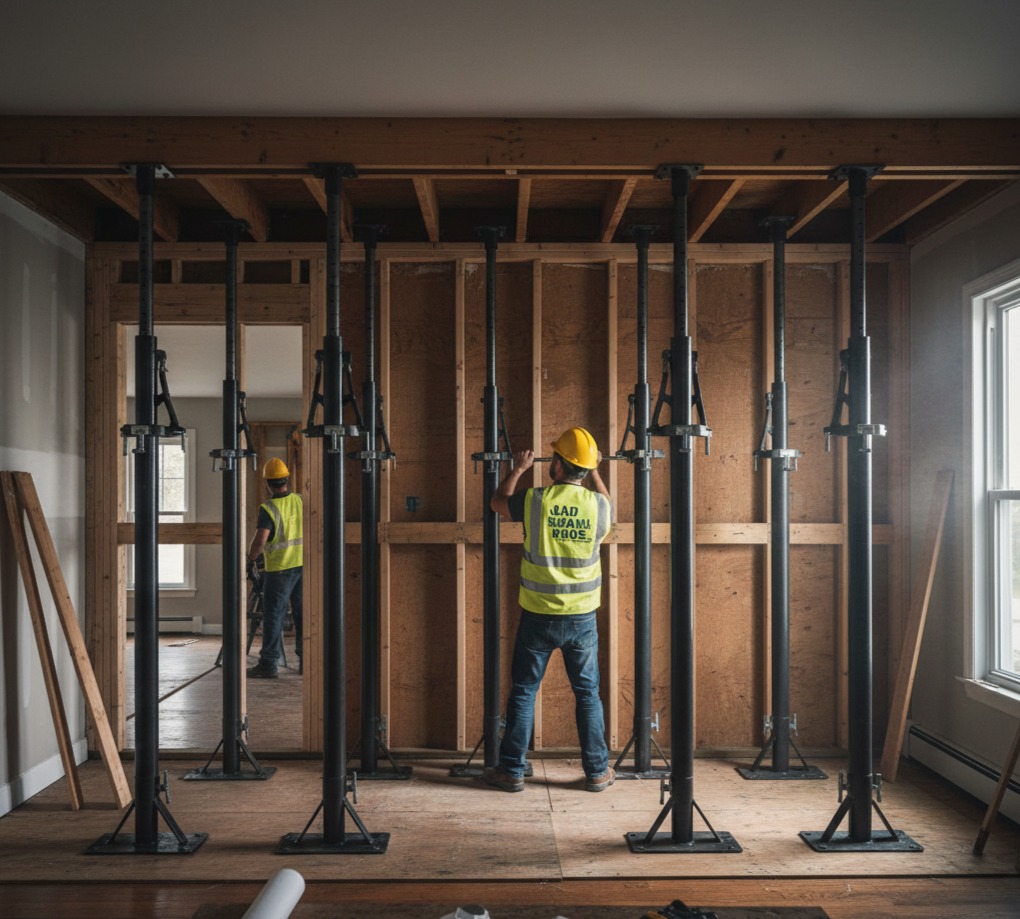
Before the wall is removed, temporary support must be installed. This support carries the load while the wall is taken down and the permanent beam is installed. They are placed strategically to prevent movement, sagging, or stress on surrounding framing, and remain in place until the permanent structural system is fully installed and secured.
Projects involving interior wall removal rely on this step to keep the home stable during construction.
Removing the Wall Safely Without Damaging the Structure
With temporary support in place, the wall itself can be removed in a controlled and methodical way. This phase is where experience matters most.
The goal of this phase is to remove the wall while keeping the rest of the structure completely stable.
Controlled demolition process
Removal usually starts with shutting off power to the area and protecting nearby spaces. Drywall is removed first to expose framing, allowing the structure to be clearly seen before studs are taken out.
Studs and plates are then removed carefully while monitoring for any movement. Nails and fasteners are extracted so the new beam can be installed cleanly.
Managing what is hidden in the wall
Walls often contain electrical wiring or other systems. Encountering these elements is common, and managing them safely requires planning and experience.
This is why demolishing an interior wall is not simply about tearing materials out, especially when the wall is structural.
Replacing the Wall With a Structural Beam System
Once the wall is removed, permanent structural support must immediately take its place. This step is what makes the entire project possible.
The beam system becomes the new load bearing element.
Beam sizing and placement
Structural beams are selected based on span length, load calculations, and how the load will be transferred to the foundation. The beam must be strong enough to perform the same job the wall once did.
In some cases, posts are added at the ends of the beam to transfer weight downward properly. The exact configuration depends on the home’s layout and structural needs.
Ensuring long-term performance
When installed correctly, the beam system maintains structural alignment, prevents deflection, and ensures floors above remain level.
A step-by-step explanation of this process is covered in a complete guide on how to remove a wall, which shows how structure is preserved even when walls are eliminated.
Structural Safety Is Grounded in Engineering Principles
Structural work is guided by long established engineering principles designed to protect a home over decades of use. These principles define how weight moves through framing systems and how any modification must preserve a clear, continuous load path.
They are not theoretical concepts. They are based on how buildings actually behave under load over time.
How load transfer works when walls are removed
When a load bearing wall is removed, the weight it once carried does not disappear. That load must be intentionally redirected through another structural element, typically a beam or a beam and post system.
This process is explained in detail in Structure Magazine’s article on transferring loads in existing buildings, which outlines how loads must be collected, carried, and delivered to adequate bearing points to avoid deflection or long term movement.
The article emphasizes that successful structural modifications depend on maintaining an uninterrupted load path from the point of support all the way down to the foundation.
Why proper load transfer matters long after construction
When load bearing wall removal follows these engineering principles, the structure continues to perform as intended well after the project is complete. Floors remain level, framing stays aligned, and stresses are distributed as designed.
Problems tend to arise when load transfer is underestimated or improvised. Sagging, cracking, and gradual movement are often the result of loads that were never properly redirected.
This is why structural planning and execution are what separate a safe wall removal from a risky shortcut.
Can You Remove a Load Bearing Wall Yourself?
Removing a load bearing wall is not just a demolition task. It is a structural modification that directly affects how weight is carried through the home. While it is technically possible for a homeowner to remove a load bearing wall, doing so safely requires a level of planning, assessment, and precision that goes well beyond typical DIY projects.
Why structural risk is often underestimated
One of the biggest challenges with DIY load bearing wall removal is that many structural failures are not immediate. A wall may be removed and a beam installed, but if the load calculations are off or the support is improperly transferred, problems often develop slowly. Floors may begin to sag, drywall cracks can appear near openings, or doors and windows may fall out of alignment months later.
Because these issues emerge gradually, homeowners may not connect them to the wall removal until significant damage has already occurred. At that point, repairs are often more invasive and expensive than having the work done correctly from the start.
What professional experience changes
Professionals approach load bearing wall removal with a clear understanding of how loads move through a structure and how to replace that support without disrupting the rest of the home. They know how to size beams correctly, install temporary support safely, and sequence the work so the structure is never left vulnerable.
This experience also allows them to anticipate issues before they arise, reducing risk during construction and protecting the long-term performance of the home. For most homeowners, working with a load bearing wall removal specialist is the safest and most reliable approach, ensuring the wall is removed and replaced in a way that keeps the home stable for years to come.
FAQ About Load Bearing Wall Removal
How can I tell if a wall is load bearing?
Visual clues can help, but only a professional evaluation can confirm whether a wall is load bearing.
Can every load bearing wall be removed?
Most can be removed if the load is properly replaced with a structural beam system designed for the home.
Is temporary support always required?
Yes. Temporary support is essential while the wall is removed and the permanent beam is installed.
What happens if a load bearing wall is removed incorrectly?
Improper removal can lead to sagging floors, cracks, and long-term structural damage.
Is load bearing wall removal worth it
When done correctly, it can significantly improve layout, light, and functionality without compromising safety.
Ready to Talk to a Load Bearing Wall Specialist?
Load bearing wall removal can completely transform a home, but only when structure is treated with the respect it demands. Every successful project begins with understanding what the wall does and how its role will be safely replaced.
If you are considering removing a load bearing wall, start with a professional evaluation. Speaking with an experienced specialist early helps avoid costly mistakes and ensures the work is planned correctly from the start.
To discuss your project or request an evaluation, contact the Load Bearing Wall Pros team to review your space and determine the safest path forward. The right planning upfront ensures the result is open, functional, and structurally sound for years to come.
About the Author
Jason Hulcy, the founder of Load Bearing Wall Pros, is a seasoned expert in wall removal and home renovations. With a passion for innovation and sustainability, he has helped countless homeowners achieve their dream spaces safely and efficiently. Learn more about his expertise here.
Recent posts
-
-
 October 26, 2022