


February 22, 2023

What is involved in Removing A Load Bearing Wall
Removing a load bearing wall can completely change how a home feels and functions. Opening up interior spaces often improves natural light, flow, and usability, especially in older homes that feel closed off or segmented. But unlike cosmetic remodeling, removing this type of wall also affects the structural system of the house itself.
That distinction matters because a load bearing wall is not just dividing space – it is carrying weight from above and transferring that weight safely down through the structure. When it is removed, the load must be redirected properly, or the home can experience long-term structural issues that are expensive and difficult to correct.
This type of project should begin with a clear understanding of what the process involves before any demolition starts. Professional load bearing wall removal services are designed to manage these risks by planning the work in the correct sequence and ensuring the structure remains supported at every stage.
This guide explains what is involved in removing a load bearing wall, from early planning to temporary support, permanent structural replacement, and final inspections.
What a Load Bearing Wall Does in Your Home
A load bearing wall is a wall that supports weight from the structure above it. That weight may come from the roof, ceiling framing, upper floors, or other walls stacked above. In many homes, especially two-story houses, interior walls play a structural role even if they do not appear different from non-bearing walls.
How load travels through a house
Homes are built with load paths, which are the routes weight follows from the roof and floors down into the foundation. A load bearing wall is part of that path – it collects load from above and transfers it downward in a controlled way.
When that wall is removed, the load path is interrupted. That means the load must be redirected into a different structural element, typically a beam supported by posts or columns. If this redirection is not handled correctly, the load may be carried unevenly or concentrated in areas that were never designed to support it.
Why identifying a load bearing wall matters
Removing this type of wall is a structural alteration. Misidentifying a wall can lead to sagging floors, cracked finishes, and movement that may not be immediately obvious but becomes more pronounced over time.
This is why correctly identifying whether a wall is load bearing is the foundation of any safe removal project and why experienced teams such as Load Bearing Wall Pros are often involved early to evaluate structural conditions before any work begins.
Why Homeowners Decide to Remove Load Bearing Walls
Homeowners remove load bearing walls for practical and lifestyle reasons. The motivation usually comes from how they want to live in the space.
Opening up interior layouts
Many older homes were designed with separate rooms that feel disconnected. Removing a wall between living areas can create open layouts that feel brighter and more modern. Kitchens, dining rooms, and living spaces often benefit most from these changes.
Reclaiming and reconfiguring space
Some projects involve enclosing patios or reworking underused areas of the home. Removing a load bearing wall can allow square footage to be reallocated in a way that better fits the homeowner’s needs and can improve resale value when done correctly.
While the reasons for removing a wall are often straightforward, the structural implications are not. That is where careful planning becomes essential.

Planning and Professional Involvement
Because removing a load bearing wall alters the structure of a home, it requires more preparation than most remodeling tasks.
Why planning comes before demolition
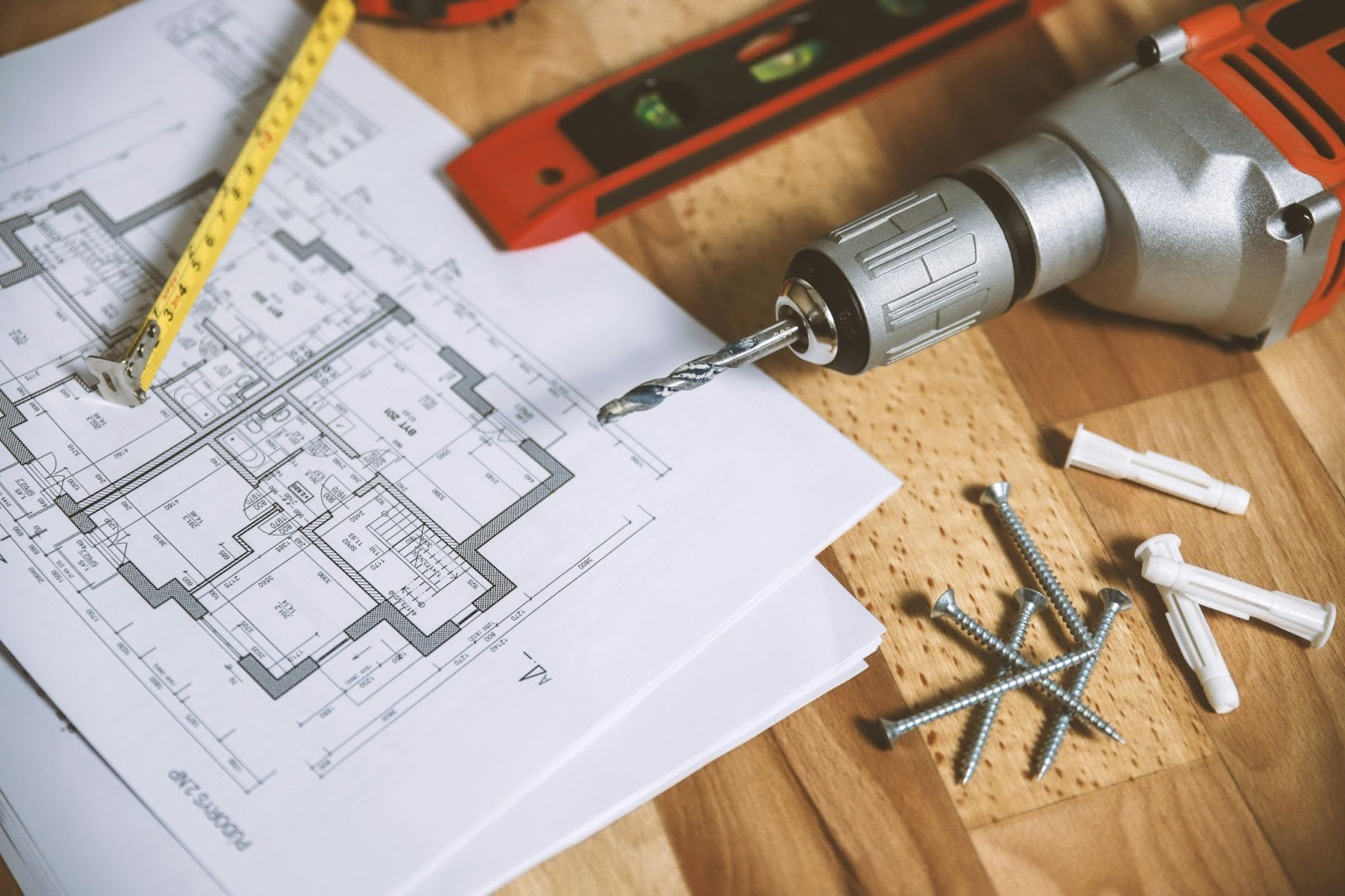
Before any framing is removed, the replacement structure must be planned. This includes determining where the load will go, what materials will carry it, and how those materials will be supported below.
Many homeowners work with experienced contractors because load bearing wall removal involves sequencing and structural judgment that goes beyond basic remodeling. Professional structural services help ensure that decisions made early in the project do not create problems later.
Temporary Support During Load Bearing Wall Removal
One of the most critical parts of removing a load bearing wall is what happens before the wall comes down.
Why temporary support is required
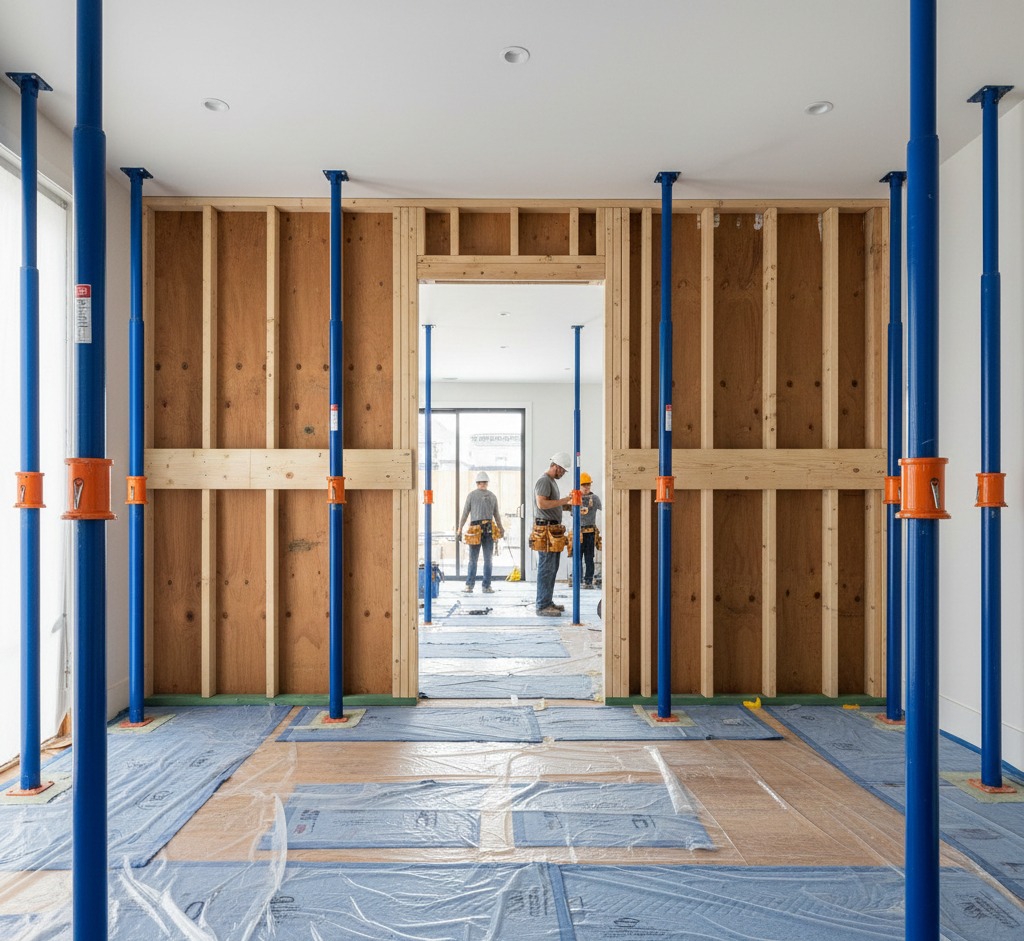
Before any studs or framing are removed, the structure above the wall must be supported temporarily. This prevents the load from shifting suddenly and protects the home while permanent materials are installed.
Temporary support typically takes the form of framed support walls or shoring systems installed on either side of the load bearing wall. These supports carry the weight while the original wall is removed and the permanent replacement is put in place.
Risks of improper temporary support
If temporary supports are poorly constructed, incorrectly placed, or removed too early, the structure can move or settle during demolition. This movement can damage finishes, misalign framing, or create safety hazards.
Temporary support must remain in place until the new structural system is fully installed and bearing properly.
Installing the Permanent Structural Replacement
Once the load bearing wall is removed, the permanent structure that replaces it becomes responsible for carrying the load.
Beams, posts, and load transfer
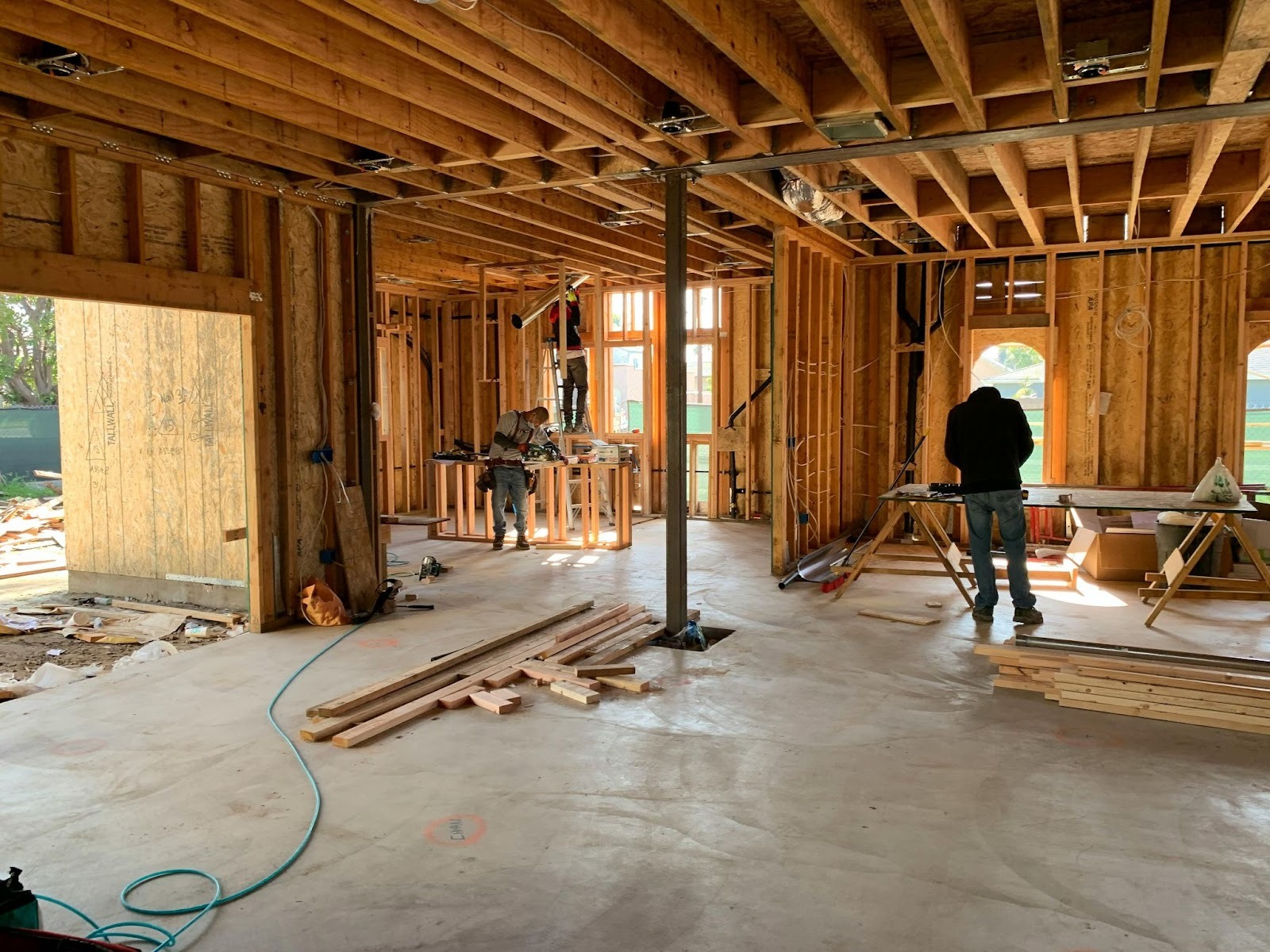
In most residential projects, a beam is installed where the wall once stood. That beam collects the load and transfers it into posts or columns, which then carry the load down into floors, beams, footings, or the foundation.
The beam, posts, connections, and supporting structure must work together as a system. Installing a beam alone is not enough if the materials below it cannot safely support the new concentrated loads.
Why execution matters
If the beam is undersized, improperly supported, or installed out of sequence, the home may experience deflection or movement over time. These issues often develop gradually, which makes them harder to diagnose and more expensive to fix.
Careful installation ensures that the structure behaves predictably long after the remodel is complete.
Building Safety and Long-Term Performance
Structural safety in residential construction is not limited to preventing immediate failure. In many renovation-related issues, damage develops gradually as materials respond to sustained loads, moisture changes, temperature variation, and everyday use. When a load bearing wall is removed, the home’s structural system is permanently altered, and the materials that replace the wall must be capable of performing reliably over time, not just at the moment of installation.
Why long-term performance matters after wall removal
Removing a load bearing wall changes how forces move through a house. Loads that were once distributed across multiple framing members are redirected into fewer components, often concentrated at beams, posts, and connection points. Even when these elements are strong enough initially, small deficiencies in load transfer or support can lead to gradual movement.
Over time, this movement may appear as floor deflection, drywall cracking, or doors and windows falling out of alignment. These issues are often mistaken for normal settling, but they are frequently the result of structural components that were not designed or installed with long-term performance in mind. Proper planning focuses on how the structure will behave years after the remodel, not just how it looks when the work is complete.
Building science and resilience considerations
Organizations such as the National Institute of Standards and Technology study how buildings perform under real-world conditions, including how materials and connections respond to repeated loading, environmental exposure, and long-term use. Their work in building science and construction highlights the importance of continuity in load paths, reliable connections, and materials that maintain performance as conditions change.
This research reinforces a key principle in load bearing wall removal: strength alone is not enough. Materials must also resist creep, limit deflection, and remain stable as the building adapts to seasonal movement and occupancy. When these factors are accounted for, the structure continues to perform predictably instead of gradually degrading.
How planning and sequencing support durability
Long-term performance is influenced as much by installation sequence as by material choice. Temporary supports must remain in place until permanent elements are fully engaged, and loads should be transferred gradually to avoid overstressing new components. Connections must be installed correctly so materials act together as a system rather than as isolated parts.
When planning, sequencing, and installation are handled carefully, the structural changes introduced by wall removal become effectively invisible. The home performs as intended under normal use, and the benefits of an open layout are achieved without introducing hidden structural liabilities that emerge later.
What Happens After the Wall Is Removed
Once structural work is complete, the focus shifts from load transfer and support to verification, finish restoration, and long-term performance.
Inspections and structural sign-off
Once the permanent beam, posts, and supporting structure are fully installed, temporary supports can be removed. At this stage, inspections are typically performed to confirm that the structural work complies with permit requirements and that load transfer elements are installed as intended. This step verifies that the new structural system is carrying load correctly before finishes are restored.
Restoring finishes and long-term performance
After approval, the project transitions from structural work to finish restoration. Drywall is repaired, flooring is patched or replaced, and trim details are reinstalled to integrate the new opening seamlessly into the surrounding space. When clients choose to include finish services, Load Bearing Wall Pros can complete this phase as part of the overall project. In other cases, finishing is coordinated with or handed off to separate trades once the structural work is complete. When done correctly, there should be no visible indication that a structural wall once existed.
The true measure of success comes after the renovation is complete and the home returns to daily use. Floors remain level, doors and windows continue to operate normally, and finishes stay intact as the structure adjusts to normal occupancy and seasonal changes. A properly executed load bearing wall removal allows the home to feel open and updated without introducing hidden structural liabilities.
When the process is planned and executed correctly, the structural changes fade into the background, and the space performs as though it was always designed that way.
FAQ About Load Bearing Wall Removal
How do I know if a wall in my home is load bearing?
A wall may be load bearing if it supports roof framing, floor joists, or another wall above it. Professional evaluation is often needed to confirm this.
Can I remove a load bearing wall without installing a beam?
No. If a wall is load bearing, its structural role must be replaced. This is typically done with a beam supported by posts or columns.
Is removing a load bearing wall dangerous?
It can be if done incorrectly. Proper planning, temporary support, and permanent structural replacement are essential for safety.
How long does the process take?
The timeline varies based on project scope, permitting, and structural complexity, but careful planning helps avoid delays.
Moving Forward With Confidence
Removing a load bearing wall can dramatically improve how a home looks and functions, but it is a project that requires respect for the structure itself. Understanding what is involved helps homeowners make informed decisions and avoid unnecessary risk.
If you are planning to remove a load bearing wall and want the process handled safely from start to finish, contact Load Bearing Wall Pros for professional guidance and execution. With the right approach, it is possible to achieve an open, functional space without compromising the integrity of your home.
About the Author
Jason Hulcy, the founder of Load Bearing Wall Pros, is a seasoned expert in wall removal and home renovations. With a passion for innovation and sustainability, he has helped countless homeowners achieve their dream spaces safely and efficiently. Learn more about his expertise here.
Recent posts
-
-
 October 26, 2022