


February 22, 2023

Top Mistakes Homeowners Make When Reinforcing Load Bearing Walls
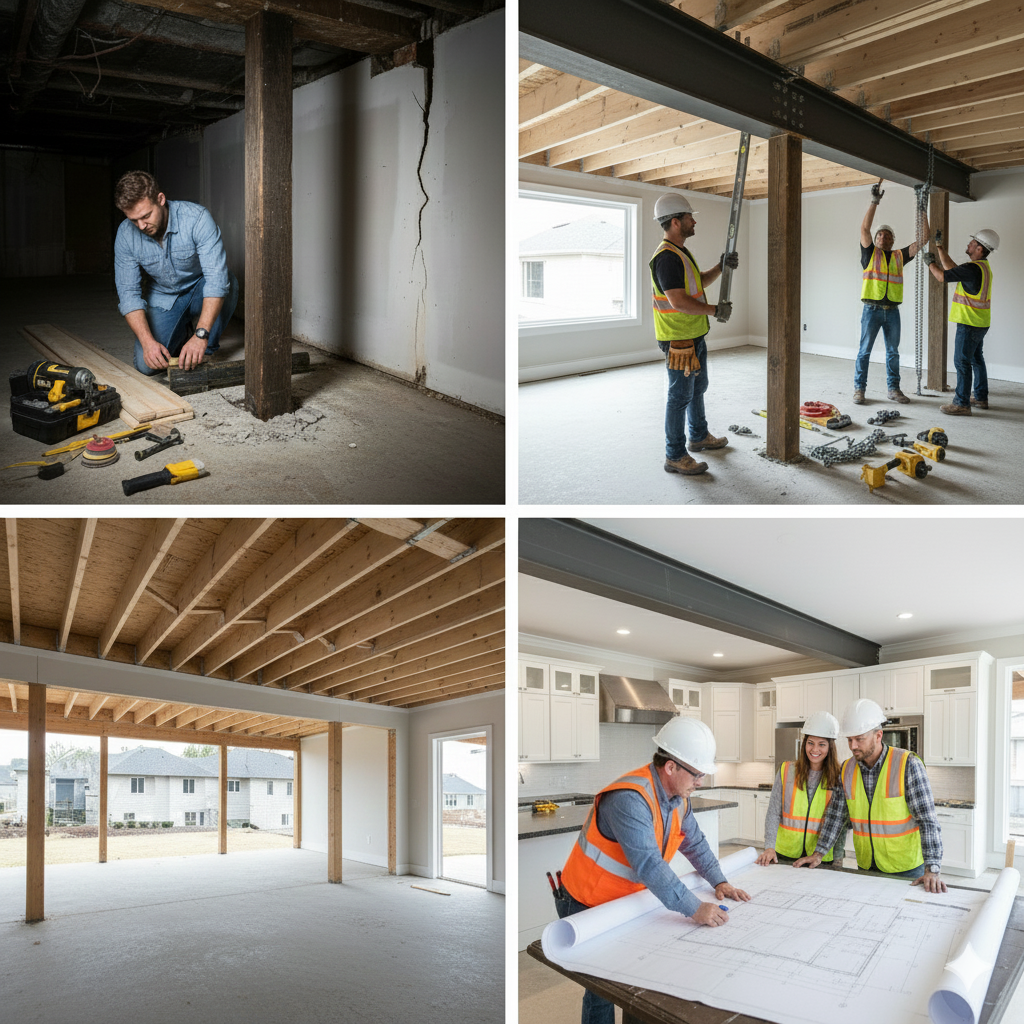
Reinforcing a load bearing wall may sound simple: add a stronger beam, maybe a couple of posts, and you’re done. In reality, every change to a structural wall affects how your home carries weight from the roof and upper floors down to the foundation.
When done correctly, reinforcement quietly protects your home for decades. Done incorrectly, problems often appear later sagging ceilings, cracks, misaligned doors, and other structural stress that can be costly to fix.
If you are planning to open a room, integrate a porch, or create an open floor plan, understanding the risks before anyone touches a stud is crucial. One of the simplest ways to gain clarity is by meeting the team at Load Bearing Wall Pros to schedule an onsite estimate and get a clear understanding of what your home’s load bearing walls may require before any work begins.
Instead of guessing which walls are critical, you receive structural insight upfront, allowing your remodel to move forward with confidence.
We’ll walk through the most common mistakes homeowners make when reinforcing load bearing walls and explain the safe, professional approach.
Why Reinforcing a Load Bearing Wall Is Different
Most home projects are forgiving. Paint colors can be changed, tiles can be replaced. Structural work is not like that. Once you cut into a load bearing wall or reinforce it, you’re permanently altering how your home distributes weight.
How Load Paths Actually Work
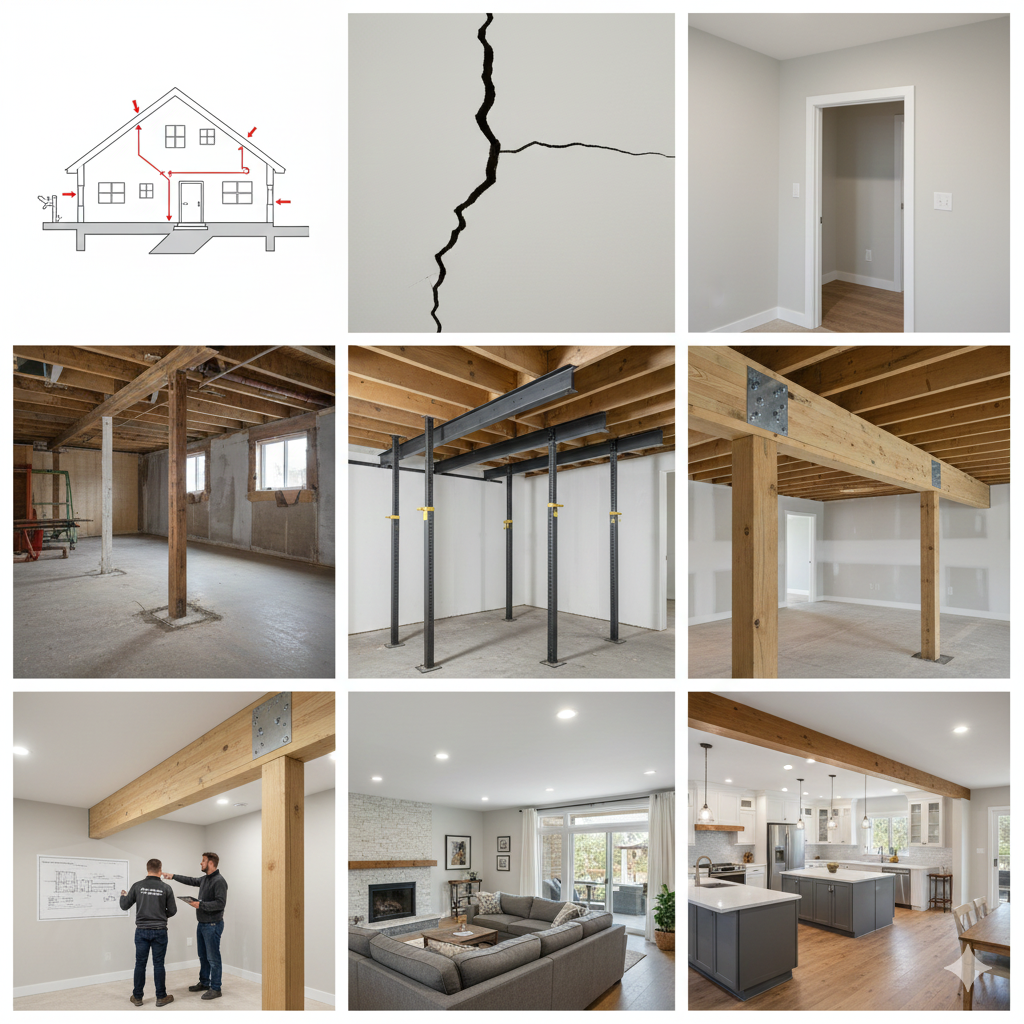
Every house has a structural “path” that weight follows from the top of the building down into the soil. Roof loads, second-floor loads, and live loads from people and furniture all move through:
- Roof framing
- Upper floor joists
- Load bearing walls, beams, and posts
- Foundation and footings
The Building America Solution Center notes that a continuous load path is essential for structural safety. It’s the connected chain of framing elements that transfers all forces from the roof down through the walls, posts, and foundation, helping homes withstand wind, seismic activity, and long-term structural stress.
When you reinforce a load bearing wall, you are not just helping that one structure – you are redirecting these forces into a new beam, new posts, or a new bearing point. If that path is incomplete, undersized, or poorly connected, the structure starts to deform slowly over time.
Maintaining a continuous load path is essential for structural safety, especially in areas subject to seismic activity or high wind loads. A disruption anywhere along this path can lead to sagging, cracking, or other long-term structural issues.
Where Reinforcement Fits Into Bigger Remodel Plans
Many homeowners think about reinforcement only when planning to:
- Remove part of a wall to create an open floor plan
- Integrate a porch or sunroom into the main living area
- Open a kitchen to a family room
- Remove basement columns for more space and comfort
While reinforcement is what makes the design safe and sustainable in all these cases, understanding potential pitfalls before any type of construction starts is essential, as every change to a load bearing wall affects how your home carries weight from the roof and upper floors down to the foundation. Proper planning ensures that your remodel is not only functional but also structurally secure for years to come.
Common Mistakes Homeowners Make
Here are the most frequent mistakes homeowners make when reinforcing load bearing walls and how to avoid them.
Mistake 1: Reinforcing Without a Proper Structural Assessment
The most common mistake is guessing. A wall may feel solid, or look minor, and assumptions are often made without verification. Both scenarios are risky.
What Homeowners Often Do:
- Open drywall for a “quick look”
- Add extra studs or posts under a sagging header
- Install a heavier beam without calculations
- Trust verbal advice instead of a formal engineered plan
These decisions may seem reasonable at the moment, especially if a wall was partially altered by a previous owner. The real danger is not knowing how the structure carries weight.
What Should Happen Instead:
- Which walls are truly load bearing
- How joists, rafters, or trusses rest on the wall
- Location of existing beams and posts
- Whether the foundation can support new concentrated loads
At Load Bearing Wall Pros, third party licensed engineers design the beam and support system, while our team handles safe execution. This step ensures the rest of the remodel proceeds with confidence and safety.
Mistake 2: Guessing Beam Sizes and Materials
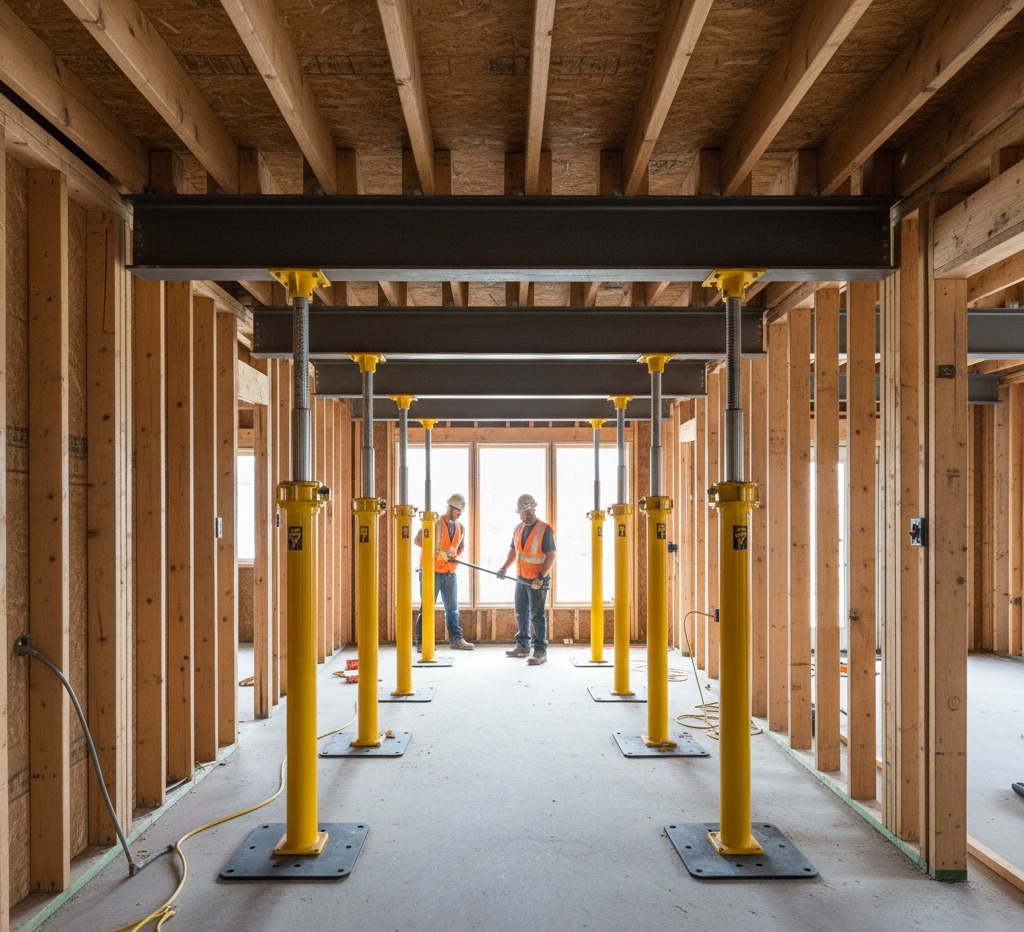
Reinforcement is not about picking the largest board at the lumber yard. The wrong beam or post can be just as dangerous as removing the wrong wall.
Common errors include:
- Doubling or tripling standard 2x lumber and calling it a “beam”
- Using decorative interior posts not rated for structural load
- Choosing LVL size based on appearance or anecdotal advice
- Setting beams in pockets with insufficient bearing surface
Consequences over time:
- Visible sagging in ceilings
- Uneven floors near reinforced areas
- Cracks radiating from door corners or windows
- Creaking framing under normal use
What Engineered Reinforcement Looks Like:
- Beam type (LVL, steel, or combination)
- Exact beam depth, thickness, and span
- Post size, spacing, and material
- Bearing requirements at each end
- Connector and fastener specifications
When Load Bearing Wall Pros installs beams, it’s based on engineered specifications, not estimation.
Mistake 3: Skipping Temporary Support and Safe Sequencing
Starting demolition before the structure is properly shored is a critical error.
Why Demolition-First Is Risky:
- Loads redistribute unpredictably
- Ceiling planes can shift
- Joists may twist or crack at bearing points
- Hairline cracks can appear and spread over time
Once the structure moves, restoring perfect alignment is extremely difficult.
How Professionals Stage the Work:
- Structural assessment and beam design
- Installation of temporary shoring under the load path
- Controlled removal of drywall and framing
- Placement and fastening of the new beam and posts
- Gradual transfer of load from temporary supports to the new beam
- Final verification that all supports are bearing correctly
This approach minimizes risk and ensures long-term structural stability.
Mistake 4: Ignoring the Foundation
Many homeowners focus on the wall itself but forget the foundation, which ultimately carries all loads.
Weak or Inconsistent Bearing Below:
- Posts set on subfloor or finished flooring instead of proper footings
- New loads on thin slabs or unsupported edges
- Crawl spaces with undersized soil piers
- Existing rot or moisture damage
Even the best beam cannot protect a home if the foundation isn’t designed to carry the load.
Why Foundation Planning Matters
Engineering guidance, including seismic design principles, emphasizes continuous load paths from the roof to the foundation. Posts supporting reinforced walls must sit on proper footings or adequately designed supports not just whatever surface happens to be below.
Mistake 5: Treating Structural Reinforcement Like Finish Carpentry
Some homeowners assume that any experienced remodeler can handle structural reinforcement. This is not true. Structural work requires specialized skills.
Where General Remodelers Fit In:
- Designing final layouts
- Installing finishes, cabinetry, trim, and flooring
- Coordinating mechanical and lighting changes
- Bringing visual design together
They should not be asked to:
- Guess beam sizes
- Invent reinforcement strategies
- Determine whether a wall is safe to modify
Mistake 6: Reinforcing Only for Today’s Project, Not Tomorrow’s Plans
Many homeowners reinforce walls only for their immediate remodel. This approach can create limitations for future upgrades.
Planning for Open Layouts and Future Flexibility:
- Will you eventually integrate a porch or sunroom?
- Will a basement remodel require fewer columns?
- Will future layouts require wider spans?
Properly sized beams and posts allow future projects without reopening structure, saving time and money.
How Porch and Open Concept Projects Connect to Reinforcement
Projects that integrate indoor and outdoor spaces or remove walls between living areas almost always require structural reinforcement first. Thinking of reinforcement as the backbone of these projects ensures a remodel feels seamless, not piecemeal.
Mistake 7: Underestimating Inspection and Follow-Up
Even after beam and post installation, the work isn’t complete until the structure is checked under its new load.
What a Proper Structural Check Includes:
- Bearing at both ends of the beam
- Post alignment and plumb
- Tight contact between beam and supports
- Correct spacing and installation of fasteners
- Signs of immediate deflection under load
This final verification ensures long-term safety and gives confidence to future buyers, inspectors, and appraisers.
Ongoing Maintenance and Monitoring After Reinforcement
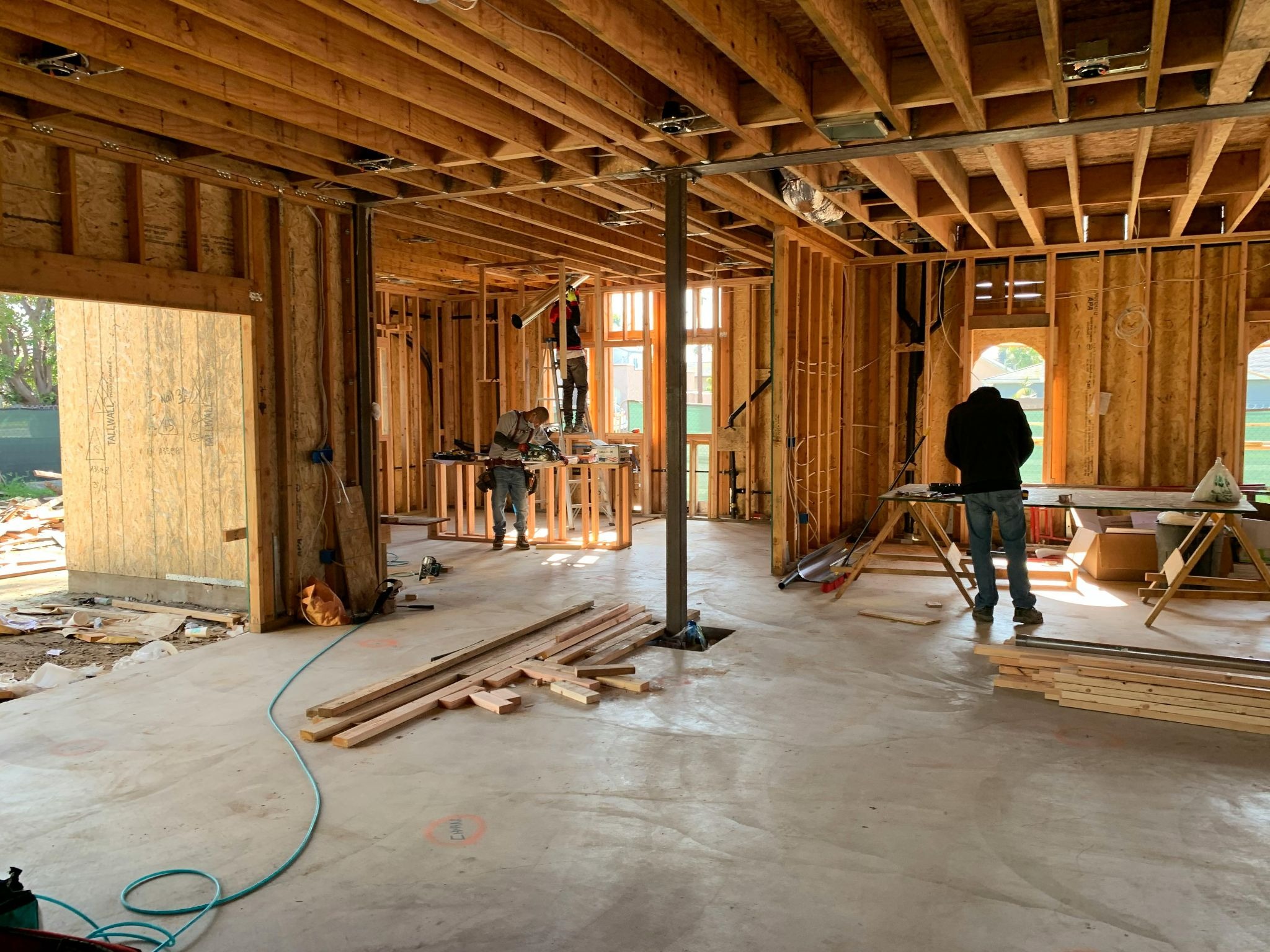
Reinforcing a load bearing wall is only part of ensuring a home’s structural integrity. Once the beam and posts are installed, it’s important for homeowners to monitor and maintain the reinforced areas over time. Even a properly engineered reinforcement can be affected by settling, moisture, or shifts in load distribution.
Why Ongoing Monitoring Matters
- Structural settlement: Even with correct installation, small shifts in soil or foundation can cause posts or beams to settle. Early detection prevents serious damage.
- Moisture and rot: Water intrusion around posts or footings can weaken the structure over time. Inspect crawl spaces, basements, and beam ends for signs of moisture or decay.
- Load changes: Renovations or new heavy furniture can alter the way weight is distributed. Reinforced walls are designed for expected loads, so sudden changes should be assessed.
- Cracks or deflection: Hairline cracks or minor deflection may appear after reinforcement. While often normal, it’s wise to have them evaluated by a professional to ensure they don’t indicate a bigger issue.
Recommended Maintenance Steps
- Regular visual inspections: Check beams, posts, and surrounding areas for cracks, warping, or unusual movement every 6–12 months.
- Monitor doors and windows: Difficulty closing doors or uneven floors near reinforced walls can signal structural shifts.
- Keep the area dry: Ensure proper drainage and ventilation to prevent moisture accumulation near foundations and posts.
- Schedule professional checkups: A licensed engineer or structural contractor can provide periodic assessments, especially if you plan additional remodels.
By combining professional installation with proactive maintenance, homeowners can maximize the lifespan and safety of their reinforced walls. This approach ensures that your investment continues to protect the home and your family for decades.
How Load Bearing Wall Pros Supports Safe Reinforcement
Reinforcing a load bearing wall is not a quick upgrade. It’s a coordinated structural process.
Our philosophy
- Start with structure
- Work from an engineered plan
- Protect the home with temporary supports
- Install beams and posts precisely
- Leave the space ready for finishing trades
By following this process, homeowners and contractors have a reliable partner for the most critical phase of remodeling.
Common Questions About Reinforcing Load Bearing Walls
What is the first step if I think a wall needs reinforcement?
A structural assessment by a licensed professional. Visual judgment alone is unreliable.
Do you design beams yourselves?
No. Licensed engineers provide stamped designs; Load Bearing Wall Pros executes them safely.
How long does reinforcement take?
Typically a few days, depending on project complexity.
Will reinforcement help future projects like open layouts or porch integration?
Yes. Properly designed reinforcement often becomes the backbone for future remodels.
Start With Structural Clarity
If you’re planning an open concept update, porch integration, basement remodel, or any project that touches a load bearing wall, start with structural clarity, not demolition.
Contact us today to schedule an onsite estimate and understand what reinforcement your home may need before anyone removes drywall or framing. Doing it in this order reduces stress, prevents costly mistakes, and gives every other trade a solid foundation to work from.
About the Author
Jason Hulcy, the founder of Load Bearing Wall Pros, is a seasoned expert in wall removal and home renovations. With a passion for innovation and sustainability, he has helped countless homeowners achieve their dream spaces safely and efficiently. Learn more about his expertise here.
Recent posts
-
-
 October 26, 2022